

Siblings attending rival schools has become a family tradition. I went to Ohio State University because I lived in Columbus. The year I graduated, my younger sister (from my father’s second marriage), graduated from the University of Michigan.
My eldest son, Claude, graduated from Michigan in 2016. This fall, his younger brother Jules will matriculate at OSU. Both boys chose their respective universities for the same reason: money.
After grants, scholarships and $5,500 a year in loans, Jules will pay $1,500 out of pocket each year, easily raised with summer employment. Graduating today with $22,000 of debt for a four-year degree is remarkably low. That should not be the case.
After World War II, Congress created the G.I. Bill so returning soldiers could affordably attend college. According the Veteran Affairs website, “Some questioned the concept of sending battle-hardened veterans to colleges and universities, a privilege then reserved for the rich.”
Within a decade, the G.I. Bill, along with other federal and state financial support for all low- to middle-income college students, produced the largest growth of the middle class in American history, becoming a model for other countries.
Two generations later, a study revealed that college graduates, over the course of a lifetime, earned, on average, $1 million more than those without a degree. The Reagan administration used this information to cut yet another “entitlement program.”
And so began the breakdown of the social contract to support higher education for all. It was not the only social contract our society abnegated.
In 1970, free-market economist Milton Friedman published an article in Time magazine asserting that employers had no obligation to their employees, the environment or anything but profit, pure and simple. Managers should not foster corporate social responsibility, but strictly work as agents of shareholders.
Recently, two Harvard Business School professors argued that Friedman’s theory is “rife with moral hazard.” They believe that the “costs of prioritizing shareholders’ interests are borne by the company, and by society as a whole, which is robbed of innovations, jobs, and tax revenue.”
The nearly complete destruction of these two social contracts has contributed mightily to the greatest disparity of income in the United States since the laissez-faire economy of the decades before and after 1900.
The Plain Dealer reported last month that the past presidents at the University of Akron collectively receive $932,517 annually. The most recent, Matthew Wilson, resigned July 31 and will leave UA to become president of a university in Missouri this fall. For the year in between his resignation and his departure, he was compensated $240,500 for which he taught one three-credit-hour class last fall and two this past spring. For comparison, the current dean of the law school earns $278,100 annually.
Sure, on paper he has a job, but it is a wide-open “secret” that Luis Proenza, who was president from 1999-2014, does little to justify his $334,750 annual compensation. Proenza was responsible for an overly ambitious building campaign — rubber-stamped by the board of trustees — that decimated the university’s finances.
After he stepped down, the same board of trustees that allowed Proenza to overextend the university replaced him with Scott Scarborough. Scarborough whacked away at popular and financially sustainable programs, making matters worse, not better. Donors stopped contributing, and enrollment disastrously declined.
Scarborough’s lack of business acumen, among myriad issues of his tenure, should have resulted in him being fired outright. Instead, he was given a golden parachute. Scarborough collects $298,267 annually to teach a few accounting courses, when clearly he cannot manage numbers out of a paper bag.
Meanwhile, as with many universities across the country, full-time faculty at UA have largely been replaced with adjunct faculty, like me. As an adjunct, I receive no benefits, save for retirement contributions into the Ohio State Teachers Retirement System.
I receive $2,000 for each three-credit-hour course I teach, which is 140 minutes of class time per week. That works out to roughly $37 an hour, assuming I only work in the classroom.
However, as any good teacher knows, that is never the case. I prepare lectures using PowerPoint presentations and seek topical readings to illustrate my lessons. I grade papers giving feedback on content and the rules of writing American English using the “MLA Handbook.”
Any student who wants me to line-edit their papers can meet with me. Other students, many of whom come from urban high schools, work next to me at a table in the library. (I tell students my office is wherever I am with my laptop.) I answer their questions and, hopefully, show them study skills they never obtained in high school.
By semester’s end, I make less than $3 an hour. I could do less, protecting my valuable time, but it is not the students’ fault that the system is rigged to load them with mountains of debt, little of which is spent on instruction. Also, there are few things that make my soul leap with joy like watching students improve.
According to a CNBC article, American CEOs today make 271 times more than the average worker. In 1978, when the breakdown in these social contracts was just beginning, the ratio was 30:1. The average worker has seen an 11.2% increase in income (adjusted for inflation) in the same time period, while CEOs have had a 937% increase.
I get it because I live it. Assuming I teach four classes in 2019 (I’d like far more), I’ll make 0.02% of what Proenza pockets. Teaching college is not something any warm body can do. I have three college degrees and 30 years of experience writing and teaching.
The fear of communism and the brutal realities of the Great Depression helped birth the mid-20th century social contracts of affordable college and corporate social responsibility. They were concurrent tides that lifted all boats, including those of the rich. And for a few decades after WWII, America upheld them.
What might reverse the current trajectory? Thus far, the Great Recession seems only to have spawned autocratic populism both here and abroad. The more these social contracts are diminished, so too are innovation, economic equality and the very health of the planet.
Go Bucks? Go Blue? What do sports rivalries matter when there’s so much more at stake?
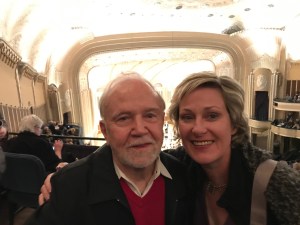
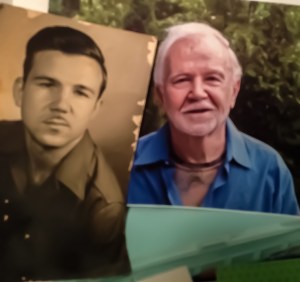
 Before Jules was old enough for school, he’d quietly play with whatever was available when I met friends for lunch. “I just wanted to be with my mama,” he now recalls. Sometimes it was frustrating. Doctor’s appointments, for example, were tough because until he was about 7, he’d become distraught if he couldn’t stay right next to me on an exam table.












 This is why I am truly thrilled about the LIFE (Learning Is For Everyone) Project, a pilot program launched by Community Legal Aid in Akron. In workshops held across the city, parents can learn what educational services are available and how to ask for them.
 Once properly diagnosed, Claude began appropriate interventions. By the end of the third grade, he was reading chapter books. He went on to get a degree in English literature from the University of Michigan and writes for The Devil Strip, an Akron arts and culture publication.

 Earlier this semester, students in my English composition classes at the University of Akron read
 A Viking inheritance as sure as my blue eyes, wanderlust courses through my veins. I’ve purchased less expensive houses and driven old cars to have more money for travel. Any dog I adopt and any child I birth quickly learns to enjoy road-tripping.
 In mid-July, I sat on our front stoop with Leif and Lyra. We live on a busy street, but our house sits far back from the road. I went inside to refill my glass of water, gone all of 30 seconds, when I heard Leif screaming, “Lyra, no! Come back!”
 Last spring, we dismantled our dangerously derelict play set, which Lyra loved. With my tax refund, I bought a new, bigger play set. However, because we’re considering selling our house to reduce expenses, we delayed construction. Now it’s (mostly) built and keeping Lyra engaged. If we move, I’ll buy another one.



 In the 1967 film Barefoot in the Park, newlyweds played by Jane Fonda and Robert Redford move into their first apartment together. They own so little, the apartment holds their vibrant emotions more than their meager belongings.




 The underside of the porch is open but covered with lattice. I slid the lattice to one side and sent Leif, who was 7 at the time, into the dusty space. One by one, he delivered the kittens to us.

 Good parents, like good pet owners, take into consideration what is best for each member of the family and the family as a whole. With divorce, relocating for jobs, choosing where and with whom to live, taking ego out of the equation isn’t always easy, but it is necessary. What is best for the children? Where will they thrive?
 In the 1980s, a bumper sticker that read “Kill Your Television” was common, especially around college campuses. A rather radical notion at the time, today, when most people have smartphones in their pockets, it seems charmingly quaint.
 When my big boys were little, we had a tank-like monitor that got no television reception. We used it to watch videos or DVDs. Claude and Hugo had cartoon movies they watched repeatedly, but also had long runs with musicals such as The Sound of Music and Seven Brides for Seven Brothers.