
Uncategorized

Hosting out-of-town guest a refresher on all Akron has to offer

When my youngest son, Leif, and I shared the same spring break last month, we drove to DC and stayed with my eldest son, Claude, who lives just two Metro stops from the National Mall. On our first day we visited the Natural History Museum where it is always, regardless of the day or season, packed cheek to jowl with school-aged children. At the Freer Gallery, I introduced Leif to Whistler’s Peacock Room, which has a history as captivating as its beauty.
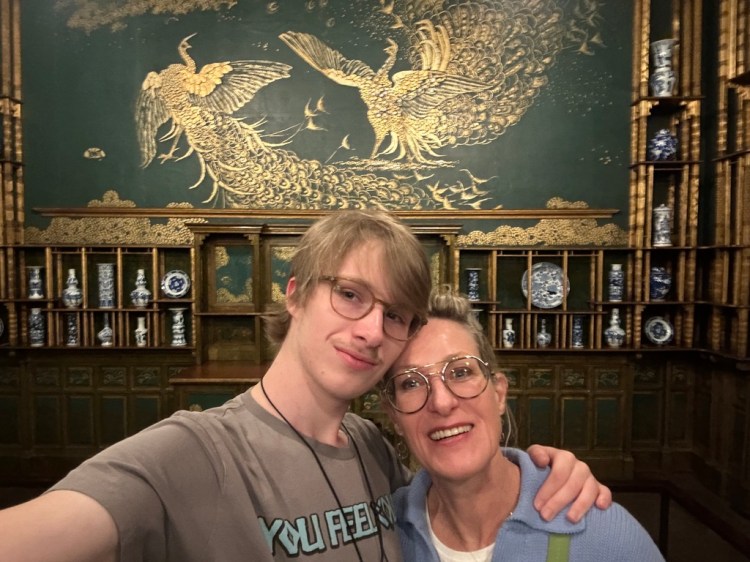
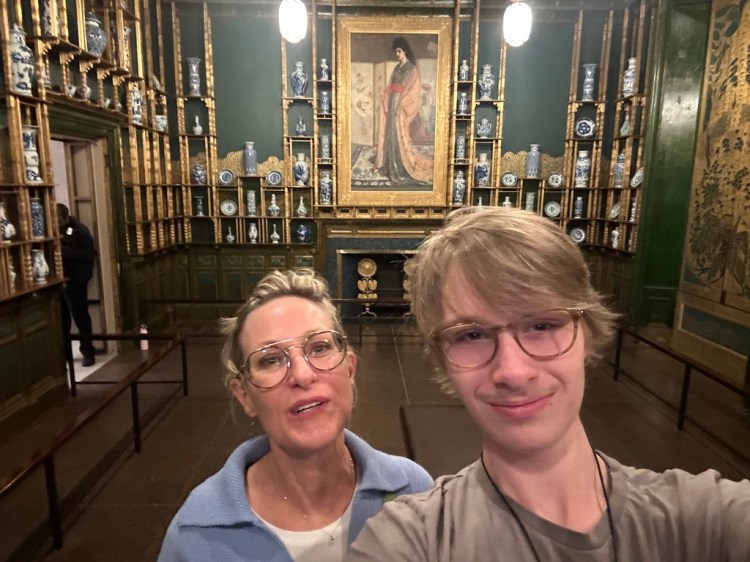
The fighting fowls at one end of the former dining room represent Whistler and his patron/enemy, Frederick Richards Leyland. Created in 1876-’77, the entire room was moved from London to American industrialist Charles Freer’s Detroit mansion in 1904. It has been at the Smithsonian since 1923.

On another day, which was sunny but made frigid by wind gusts I’ve learned are common in DC, my boys and I walked the length of the mall to the Lincoln Memorial, then over to the tidal basin where blossoming cherry trees softly accented the rock-cut memorials to MLK, FDR and Thomas Jefferson.
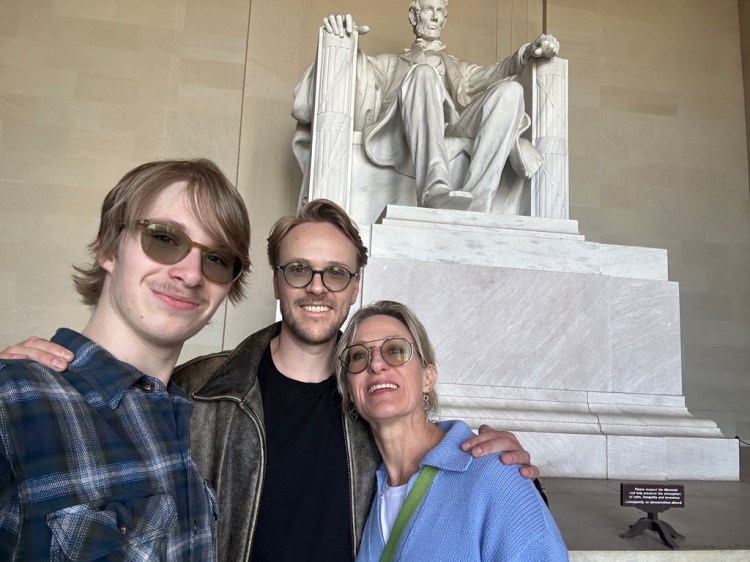
I have visited DC countless times in my adult life, but it had been 40 years since I’d seen the Lincoln or Jefferson Memorials.

“It’s been since I moved here, four years ago, for me,” Claude told us.

And that’s how it is, isn’t it? It takes an out-of-town visitor for a local to revisit places they are proud exist in their city.

Last April, I did just that. As Akronites know, it can be hard to lure Cleveland-area residents down here, so I was happy when my friend James accepted my offer of a one-day, 5-cent tour of Akron and made the trek from Tremont. After lunch at the Mustard Seed Market Café in Highland Square, we hopped into my 6-speed Venue.

James and I became acquainted through our appreciation of art and design, so naturally the first place I took him to was…the downtown Akron-Summit County Library. In the early 2000s, renovations designed by NYC architecture firm Gwathmey Siegel doubled the library’s size, while making every square foot welcoming, intimate and light-filled.

When turning north onto South Main Street from Cedar Street, large letters that spell the word LIBRARY, which are illuminated at night, seem to magically float above the center of the street.
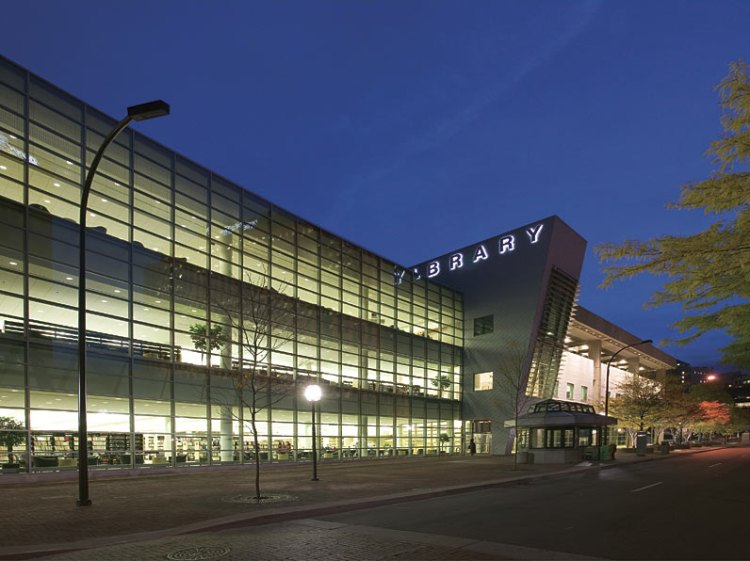
Main Street is a straight path, but it drifts oh-so-slightly to the west at the block where the library is located on the east side of the street. The designers used this minute angle, and an exterior cantilevering black-marble feature, to create the identifying effect, visible from more than a mile away.

The library’s designers understood most people would enter the building from its underground garage entrance. Just inside is a walkway ramp with stainless steel railings and a floor of brushed glass-block.

But it does not feel sterile or cold. On the right side, long windows framed in light-colored wood punctuate an interior wall separating the ramp from the work tables on the library’s first floor. On the left, floor-to-ceiling exterior window flood the entryway with sunlight ‒ a dramatic ascent into brightness after the dark, cavernous garage.

James and I toured every department in the library before I took him to the hallway outside the auditorium where, hung on the far wall, are two Claire Cressler paintings.

Two Claire Cressler paintings are on display at the Akron-Summit County Public Library Main Library in downtown Akron.

From the library, we walked across the street to the Akron Art Museum.

Three years after the library’s renovation, the art museum also underwent a significant expansion and renovation under the visionary leadership of then-director Mitchell Kahan. A baby-bear-sized museum ‒ not too big, not too small ‒ the Akron Art Museum has a notable permanent collection. When we visited, the temporary exhibit “She said, She said,” with artwork by 37 contemporary women artists, was on display.

As with the library, James was suitably impressed. “Look at all these Cindy Shermans! You know my wife contributed on a Sherman book?” I had not, but neither was surprised.

I then drove James around the University of Akron campus, pointing out the Dale Chihuly statue in the circle outside the Goodyear Polymer Center. Dozens of blue geometric blobs, reminiscent of plastic grocery bags filled with air, cluster around a pole atop a wide concrete cylinder. My four sons call it the “rock candy sculpture” after the wooden sticks with large sugar crystals on one end.

The Dale Chihuly sculpture stands in front of the University of Akron's Goodyear Polymer Center on Monday, April 21, 2025, in Akron, Ohio.

As a steady rain prevented us from walking, I slowly drove the narrow roads of Glendale Cemetery, the final resting place of many of important Akronites, including John Buchtel and Frank Seiberling.

“It’s more impressive than Lake View Cemetery on Cleveland’s east side!” James said, and I agreed.

He then asked, “Did Olmsted design it?” No, but it’s founder modeled it after Boston’s Mount Auburn Cemetery, a place that significantly influenced Frederick Law Olmsted and his park designs.

We tried to end the day at Edgar’s Restaurant, but they were booked for a function (and sadly, are now permanently closed), so I took him to Hop House on High Street, near the spot where Sojourner Truth gave a speech in 1851. We enjoyed beer, along with pizza and salad from Totally Baked Pizzeria, a separate business located next door to Hop House that delivers to the bar.

It was a good day and seeing Akron through the eyes of a newcomer joyfully reminded me why I love living here.

This was first published on Sunday, April 12, 2026 in the Akron Beacon Journal.

Down syndrome · Lyra's Latests · Parenting & Family

Check assumptions on what teen with Down syndrome can do

Assume That I Can, So Maybe I Will,” released in 2024, is one of my favorite World Down Syndrome Day video shorts.

Down syndrome occurs when a person has three copies of the 21st chromosome, which is why World Down Syndrome Day is on 3/21. Every March 21, events that celebrate people with Down syndrome (DS) take place worldwide.

Because my daughter, Lyra, a 13-year-old sixth grader, has DS, she has an Individualized Education Plan (IEP) at her public school. IEPs have specific goals for each student and must be updated every year. This year, Lyra’s IEP team, comprised of teachers, intervention specialists, administrators, her father and I, all agreed it was time to add to her goals the skills she’ll one day need for employment and independent living.

In other words, we need to check our assumptions and see what Lyra can do.

When she was an infant, we had to figure out how to best support our child with two unexpected diagnoses (she was born with cataracts as well as DS) we knew little about. We met with medical professionals, read books, visited websites and joined DS organizations. One of these, Down Syndrome Diagnosis Network, organizes closed Facebook groups for mothers whose children with DS are the same age. Throughout Lyra’s first five years, this cohort group was an invaluable resource. The other moms and I shared tips on speech development, proper walking techniques, fine motor skill development and, eventually, potty training.

Then came early schooling. Mothers shared successes and, again, tips on what helped our kids with classroom dynamics as well as early math and reading skills. (Fun fact: strong short-term memory often accompanies a DS diagnosis and many children with DS easily learn to read.) We also supported one another when some schools did not meet the needs of our children.

Then, around the time Lyra began the first grade, life plateaued. We hadn’t figured out everything, but our early concerns had been addressed. Lyra walked, talked and actively participated in school and extracurricular activities. It was like we’d graduated from a multi-year crash course in all things DS and, for about five years, conversations with other DS parents were mostly social.

Then, a little over a year ago, puberty hit and once again we are in new territory. When Lyra was little, we made many medical and educational decisions without her input, as we did all our children when they were very young. But we now find ourselves deciding things for our teen-aged daughter that she, unlike her neuro-typical peers, cannot objectively discuss with us. These guardianship-like situations come, for me at least, with a pique of grief. Undoubtedly, as our daughter becomes an adult many such decisions will need to be made.

Although she’s still in middle school, Lyra will be 18 in just over four years. This fact (and all things puberty) gave rise to a smaller, yet robust, version of the panic I’d felt in Lyra’s first years, which grew until I received an email from a regular reader of this column. John Rasinski has a 25-year-old son, John Paul, who has DS and works four days a week as a stable assistant at Pegasus Farm in Hartville. Pegasus is widely known for its equine therapy programs for people of all ages with disabilities, but it was not until Rasinski wrote to me that I learned it also has a work program for adults with developmental disabilities.

Lyra Christensen and John Paul Rasinski, who was dressed as the Tin Man for a Halloween party he later attended, meet Pegasus Farms.
Lyra Christensen and John Paul Rasinski, who was dressed as the Tin Man for a Halloween party he later attended, meet at Pegasus Farms.

On an afternoon in late October, Lyra, her brother Leif and I met Rasinski and John Paul at Pegasus. In one of the cleanest stables I’ve ever seen, we watched clients mount and ride several of the farm’s horses into an arena. I imagined commuting his son to work and back took a tremendous toll on Rasinski’s life as the farm is 40 minutes from Akron, where the two live and Rasinski works.

“Oh, no, I don’t drive him. He has transportation,” he told me. When I asked the cost, I learned it is covered by a Medicaid waiver, something John Paul became eligible for at age 18. This led to a flurry of questions, and we agreed to meet at a later date for coffee, where Rasinski outlined for me, first in conversation and then in a follow-up email, various Summit County, state and federal services and programs for adults with with developmental disabilities.

My relief at meeting someone further down the road our family is about to travel, and who is willing to share his knowledge and experience, is indescribable. As we discover what Lyra can do in the years ahead including at high school, work, independent living and her social life, I hope to give to other families what Rasinski has given to ours by sharing what we learn.

This was first published in the Akron Beacon Journal on Sunday, March 29, 2026.