Uncategorized

Decades of dedication to education, mental health, spiritual practice and friendship have shaped my life for the better

In the months before I turned 60, an unanticipated perspective arrived: How grateful I am to my younger self for several decisions she made and maintained. Some were measured choices, others happenstance, chosen with a “might as well” approach. Like a painter picking certain colors before placing brush to canvas, these choices made decades ago became the palette of my life.

Calling my childhood tumultuous would be euphemistic. My parents and stepparents were too busy with debauchery to tend to the children found in their households. There were occasional visits from child welfare agencies and I had a brief stint in foster care, but mostly my siblings and I raised ourselves, ever eager for the day we could leave and forge our own paths.

Unlike my brilliant younger sister, who applied to only one college her senior year, was accepted, given a generous funding package and left four years later with a bachelor of fine arts degree, I roamed the country after high school. At 21, I settled in Columbus and, because it was the local university (happenstance), I enrolled (might as well) at Ohio State the same fall my sister started at University of Michigan. For five years, I consumed education like a starved person at a royal banquet, earning two bachelor’s degrees and a new life trajectory.

As an OSU student, I accessed free counseling services that helped me sort out my first two decades and the episodes of depression that started before I was a teenager and would return unannounced, throw open the door and settle in like a soldier from an army of occupation. Therapy, along with an abiding practice of Buddhist meditation, also begun while an OSU undergrad, have encouraged me to be honest, yet kind with myself.

Ten years after completing my bachelor’s degrees, I enrolled in graduate school and earned a master’s degree at Kent State. I continue to seek out therapy whenever the need arises, which it has many times. Meditation and my Buddhist communities have expanded my insight of and capacity for the human condition. College, therapy, meditation – all begun in my 20s – have done much to break the generational dysfunction into which I was born.

Equally important to the warp and weft of my life is something else that originated at OSU – my friendship with Jen Marvelous, who has appeared in this column numerous times, starting with a description of the 14-month trip around the world she took with her husband and four daughters. Bold and generous, she is to me what Oprah is to Gayle, what Lucille was to Vivian.
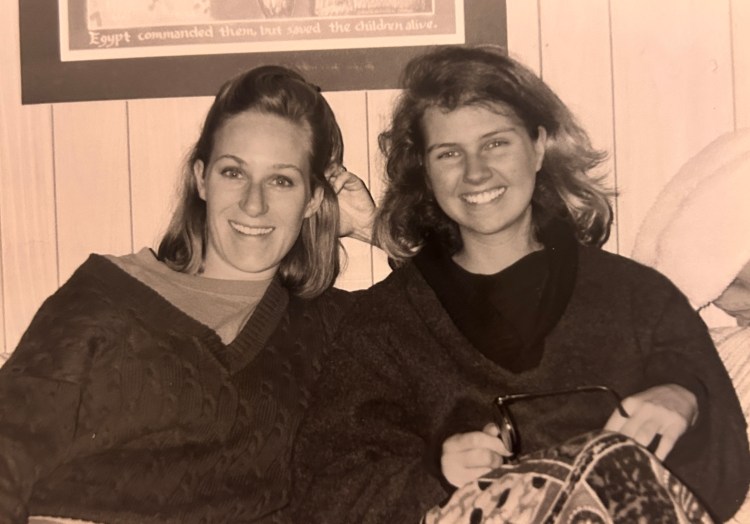
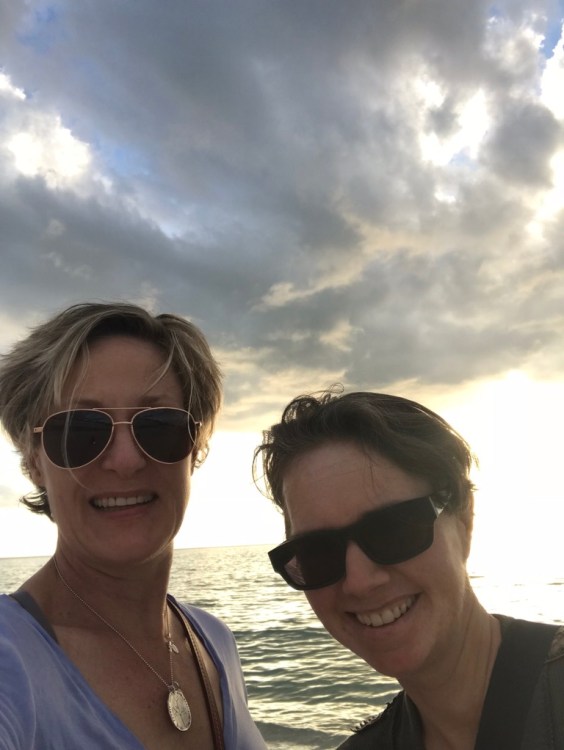
I have maintained friendships, all meaningful, that began in every decade of my life. The difference with Jen is she and I continued to meet up even though we’ve not lived in the same city since the early ’90s. She was at the birth of my first three sons – my kids call her Auntie Jen – and I helped care for her after the birth of her second daughter. My “where were you” moment for the 2005 London bombings was Ithaca, New York, where Jen and I had spent the afternoon playing in a shallow river with our young children.

The following year, I spent several days at a remote Buddhist monastery. When I drove back into cell range, my phone started vibrating like a jitterbug. Jen, who was eight months into her third pregnancy and planned to start nursing school a few weeks after the birth, had left several panicked voicemails. She had just discovered she was expecting twins. My heart hurt to think Jen felt ignored when I didn’t return her calls immediately. Today she has multiple nursing degrees and four delightful young adult daughters.

Jen and I have supported each other through all cycles of life – weddings, divorces, births and death. I’ve written about her dad, John Tressler, who was like the Tom Hanks’ character in the movie “A Man Called Otto,” gruff on the outside, but a big softy at heart. Mr. Tressler died of Alzheimer’s in 2023 when Jen and her girls were in Patagonia, Argentina. Using my phone, I live streamed the funeral for Jen.

Holly Christensen with her best friend, Jen Marvelous, and Jen's other, Elaine Tressler.

Last month, my children and I celebrated Jen’s mom’s 85th birthday with the family at her sister’s countryside home in Ravenna. Everyone wore sequins and rhinestones as the theme was bling. Our kids gabbed while gorging on gooey waffles from a Cleveland Waffle Co. food truck hired to cater the event. And then, in the tradition Jen had with her dad, members of our combined families caravanned in three cars to Village Discount Outlet to pop some tags.

College, therapy, spiritual practice, close friendships – all require work, the last two continually. It’s not like breaking big rocks into little rocks. It’s simply showing up no matter the distance or inconvenience and leaning in to whatever needs to be learned or done. It’s work that pays dividends like nothing else.

This column was first published in the Akron Beacon Journal on Sunday, August 2, 2026.
Uncategorized

Bridges Learning Center offers students a path to success

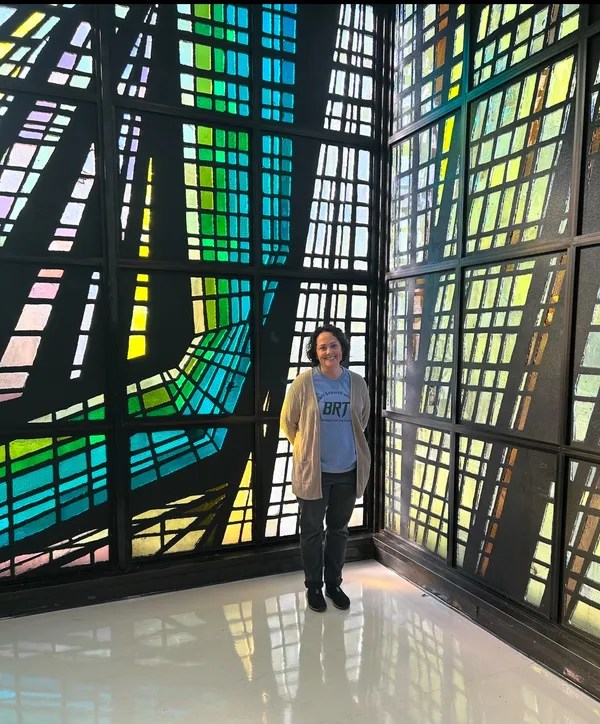
Principal Michele Angelo in front of one of several stained glass walls in Bridges Learning Center.

When I recently parked across the street from Bridges Learning Center, I was shocked at how many times I’ve driven by the building without noticing it. A pleasant combination of Brutalist and Prairie styles of architecture, Bridges is set further back on Thornton Street than its neighbor, Akron’s Fire Station No. 4. The school building is a hidden gem, and what occurs inside its walls is even more valuable. We are fortunate in the United States that federal law guarantees all states must provide all students with a Free Appropriate Public Education (FAPE) in the Least Restrictive Environment (LRE). This has not always been the case and is the result of hard-won civil rights campaigns waged in the second half of the last century. (For more on that history, read “Being Heumann: An Unrepentant Memoir of a Disability Rights Activist.”)

Mandated to educate all children, what do public school districts do when a child’s behavior  limits or prevents them, and often their classmates, from learning? Ideally, they follow clearly defined steps of positive behavior intervention supports (PBIS) to help students learn to regulate their emotions. As a tutor in two elementary buildings in Akron schools over three years, I have witnessed faculty, administrators and staff patiently assist students with PBIS.

But what if a child does not adequately respond to these intervention supports? Smaller districts might pay for the student to be placed outside the district at specialized schools. But Akron, like many larger districts, has its own dedicated facility. Bridges Learning Center was created in 2006 when programs for elementary and middle school students merged. A decade later, high school classes were added and, since 2019, the former Reidinger Middle School has been home to Bridges Learning Center. 

One might imagine the school having a carceral environment, but quite the opposite is true – every corner of the building is calm, orderly and inviting. It reflects the school’s mission to “provide social, behavioral, and academic skills through high quality teaching…by creating a positive, nurturing and supportive environment.” Michele Angelo, the school’s principal, repeatedly used the words “restorative” and “family” or “team” approach to describe what occurs in the school. Students in the United States with special education needs receive Individualized Education Plans (IEPs) – protocols developed by educators, specialists and the student’s guardians as a team – that outline specific, individual services and accommodations needed. All students at Bridges were placed on IEPs in their home schools, and it was their IEP teams at their home schools that determined a placement at Bridges was appropriate.

The range of student abilities at Bridges includes children with multiple physical and cognitive disabilities, children who are non-verbal and children with various learning disabilities. For a few students, placement at Bridges is determined to be the best location for the duration of their education. But the goal for most of the 102 students currently at Bridges (the majority of whom are in grades 3 to 12) is to acquire the necessary emotional regulation needed to return to their home schools.

How do the faculty and staff at Bridges accomplish this goal? Each classroom is staffed with a teacher, an intervention specialist (special education teacher) and an aide. Also, three full-time, floating educational assistants are available to go to any room where extra assistance is needed. And Red Oak Behavioral Health, which partners with schools throughout the district, has two counselors and three case managers at Bridges full time.

Music therapist Edie Steiner's board at Bridges Learning Center in Akron.
Music therapist Edie Steiner’s board at Bridges Learning Center.

But wait, there’s more. Art therapist Shenan May and music therapist Edie Steiner work with students both one-on-one and in group settings. In addition to their education and experience in art and music therapies, they have been trained in dialectical behavior therapy-informed (DBT) practices. According to the Cleveland Clinic’s website, DBT “focuses on helping people accept the reality of their lives and their behaviors, as well as helping them learn to change their lives, including their unhelpful behaviors.” Ms. Steiner’s classroom is filled with instruments, including several electric guitars and two drum sets – much of it purchased with grant funding. I could devote an entire column to the benefits of these therapies, but a quick look at Ms. Steiner’s board for her classes shows the seamless integration of music and behavioral development students experience in her class.

Behind Bridges are expansive fields the school integrates into its student experience. Second grade teacher, Kim Zeffer, obtained funding from Lowe’s to install several raised planting beds, gardening equipment, benches and more. One of the Red Oak therapists received grant money to create a remote-control race car team. As any parent knows, most kids love RC cars. Participation on the RC team helps students “focus on teamwork, problem-solving, and self-regulation during races.”

And Bridges also helps its students prepare for life after they leave. High school students, some of whom are reintegrating after time in juvenile detention or residential placement for mental health issues, not only work on academics and emotional regulation, but also with other governmental service providers such as Summit DD, Ohio Department Job and Family Services and High School Job Training that come to the building to help with job training and placement.

Bridges’s students are members of our community. The team approach at Bridges is an effective way to assist these students to succeed not only when they return to their home schools, but throughout their lives. What happens inside Bridges helps not only its students, it’s a benefit to us all.

This was first published in the Akron Beacon Journal on Sunday, October 12, 2025.

Civil Rights · Down syndrome

Down syndrome mothers’ group offers much-needed friendship, support

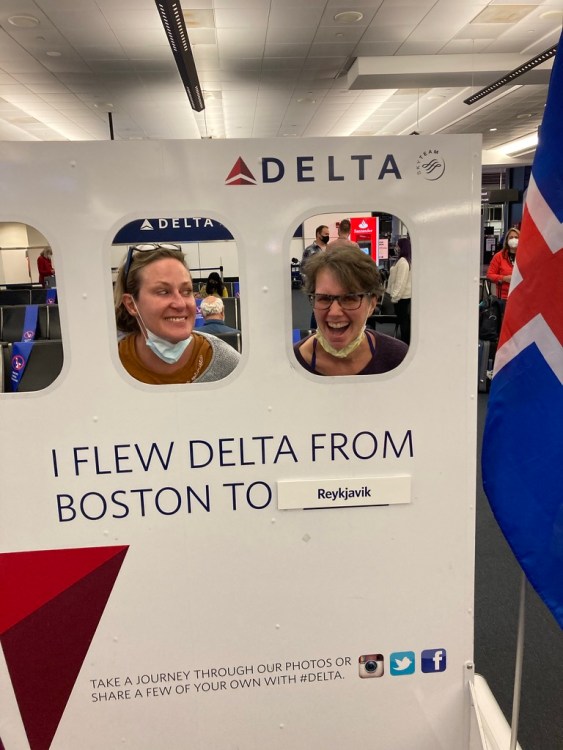
All checked in, ready to board and let the good times roll!

I’ve never been a joiner. In college, I held a poor person’s disdain for sororities. I never belonged to a PTA of the schools my five children attended, though I donated. And when, like me, my only child in marching band played in the percussion section, I attended most of his performances but told him upfront I’d never be a band parent. (If you know, you know.)  

Then, 12 years ago, I birthed my way into a group. When my last child arrived with Down syndrome, my need to know other mothers of children with DS was immediate, strong and continuous. Shortly after my daughter Lyra’s birth, two other mothers with children Lyra’s age started the non-profit Down Syndrome Diagnosis Network (dsdiagnosisnetwork.org).

The mission of DSDN is “to connect, support, and provide accurate information to parents – and the medical professionals who serve them – from the time of diagnosis through age 3 while fostering the opportunity for lifelong connections.” DSDN hosts several online groups for parents of children with Down syndrome, and each year a new group is formed for families of children born that year. 

I am a member of the initial group and we refer to ourselves as the “Original Rockin’ Moms,” or “ORMs.” The rockin’ part refers to our kids, whom we feel rock that extra 21st chromosome. Connecting with mothers whose children with Down syndrome are the same age as my own child has been invaluable. Women across the nation immediately respond to questions about whatever issue, concern or celebration another family is experiencing.

The first years of Lyra’s life, I regularly interacted online with my ORMs. We shared countless ways in which we helped our children acquire skills that most typical children pick up with seemingly little effort — things such as nursing, sitting up, crawling, pincer gripping, walking, talking and, perhaps most of all, toilet training.

During Lyra’s first years, I felt chronically panicked about whether I was doing every thing I could, and each thing the best way possible, to help her gain the skills for a full, happy life. Starting weeks after she was born, Lyra received speech, occupational and physical therapies for five years at Akron Children’s Hospital, where she still attends speech therapy sessions. She also receives all three therapies at her elementary school.

I went to my first of many National Down Syndrome Congress conventions shortly before Lyra’s first birthday. There I attended informative sessions on early speech development (and also bought a straw kit that trained her tongue to rest not on her lips, but inside her lower jaw’s horseshoe of teeth), and gross and fine motor skills. It is also where I met many ORMs in person for the first time.

But not all parents of children with DS have other things in common. Like any large group, some members will coalesce more easily with one another than with others. Think of the people you knew at school. You may have liked most of them, but only had sleep overs with a much smaller group. 

A few years ago, a subset of the Original Rocking’ Moms started an annual get-together. I missed the first three because I wasn’t paying attention. Lucky for me, a few of these women reached out this spring and begged/ordered me to join them this year on a cruise. I had never been on a cruise because I presumed, like joining groups, I’d deeply dislike a trip that was overly organized and commercial. Boy, was I wrong.

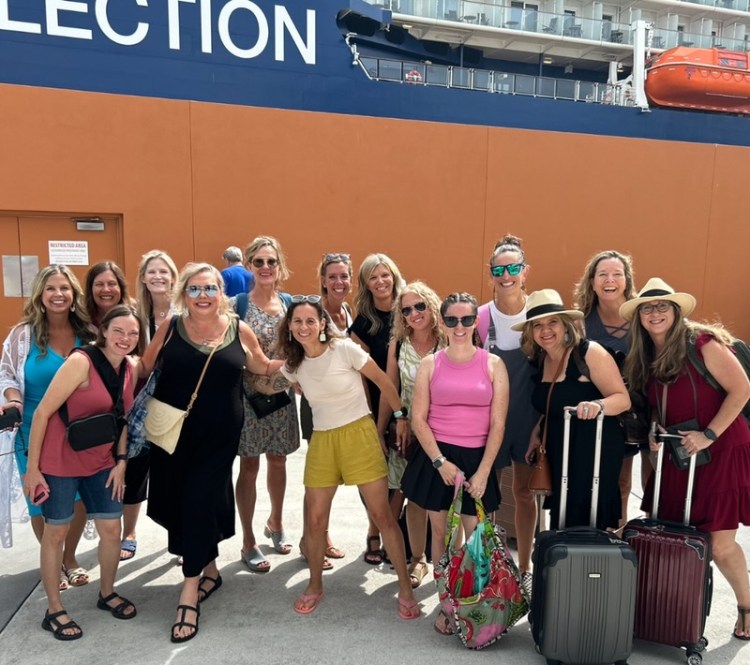
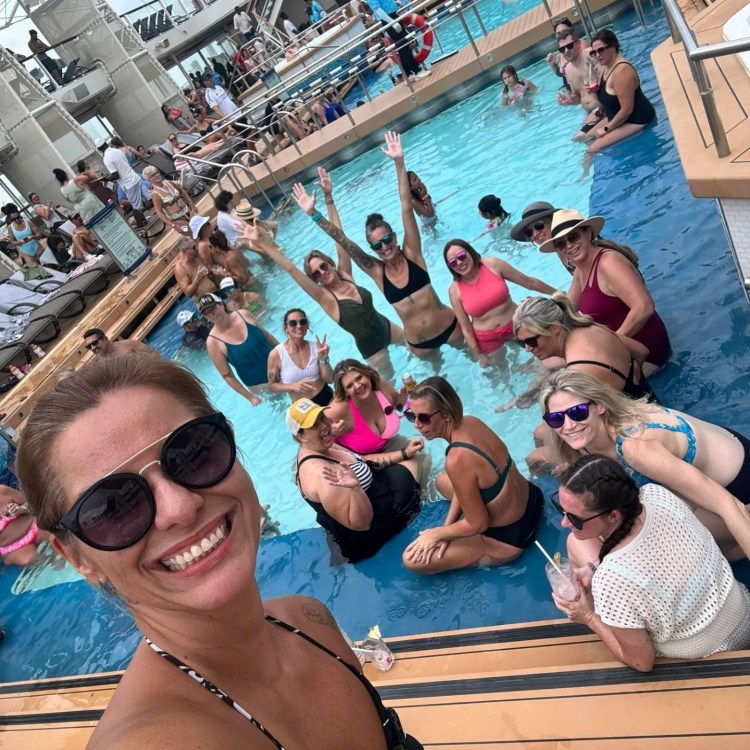
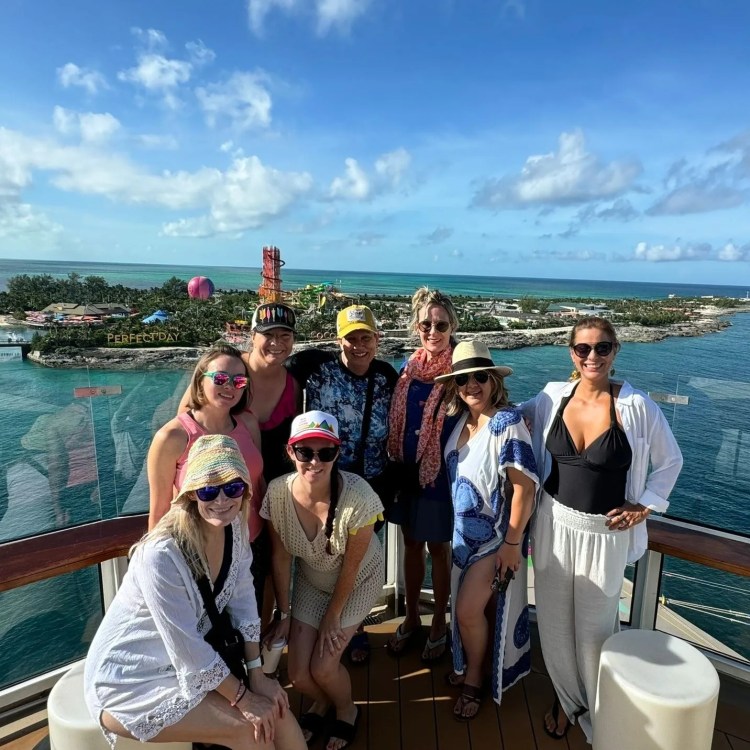
For four days and three nights last month, 15 of my favorite mamas and I ate incredible meals, enjoyed a wide array of live entertainment, visited the beaches of two Caribbean islands and, best of all, danced for hours every night (silent disco, here I come!). 

At the three previous events in cities, my ORMs endured unending logistics. Which hotel? Where to go to dinner? How many Ubers to call? Who paid for the Ubers and how much does each person owe? Do we want to see a band or a comedian? Those stressors do not exist on a cruise and we determined that from now on our annual gatherings will be cruises at different ports around the country.

We also did not need scheduled discussions about our children. Most of us have known each other for over 10 years and our conversations naturally flowed to the topics now germane to most of us, such as puberty and middle school. I left the ship believing Lyra is doing fine developmentally, which can feel hard to know when few DS families in our home community have children her age.

Parents of children with Down syndrome often say that their child is everything they never knew they wanted. I feel the same about my tribe of Down syndrome mamas. I belong to a lifelong group I find in many ways to be as meaningful and important as family. Sometimes even more so.

This was first published in the Akron Beacon Journal on Sunday, October 13, 2024.