Down syndrome · Education · Lyra's Latests · Parenting & Family · Uncategorized

Daughter’s last year of camp marks the end of an era

For the past 33 years, my five children and I have spent time each summer in Charlevoix, Michigan, 50 miles south of the Mackinac Bridge. For many years, I left my first three kids, all close in age, with their grandparents, who stored bikes, fishing gear, boogie boards, basketballs and more for the handful of weeks they had the kids. The boys spent their days at Lake Michigan, just half a block from the grandparents’ house, or exploring the town on bike and foot. They checked in as needed, mostly at mealtimes.

As there is a nine-year gap between my third and fourth children, the grandparents were much older when my last two kids’ were big enough for summer visits. Their grandma suggested we enroll them at Camp McSauba, a city-run day camp on a ski hill next to Lake Michigan, so I could stay up north and work remotely. Because Grandpa had been a city employee, the fee was just $85 a week in 2015, the first year my son Leif attended.

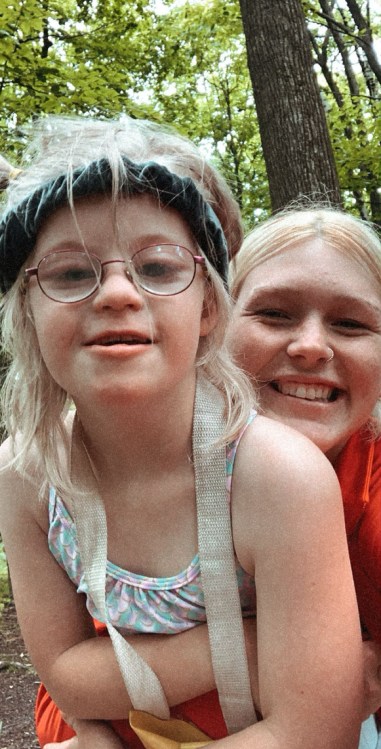
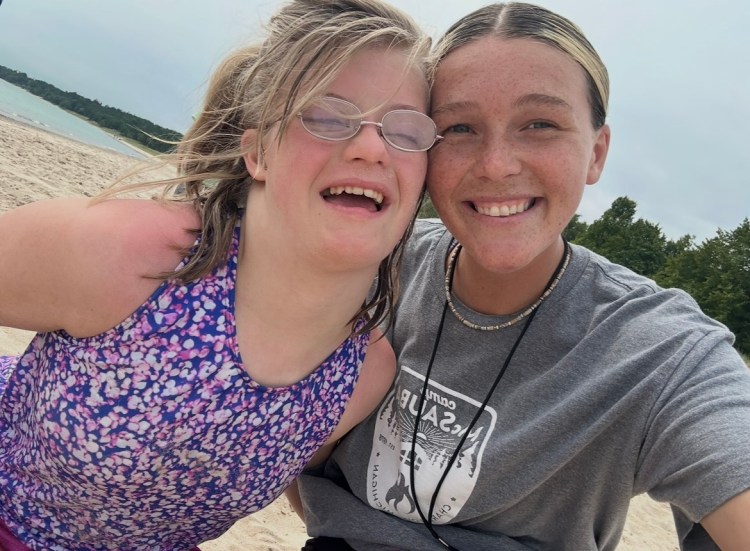
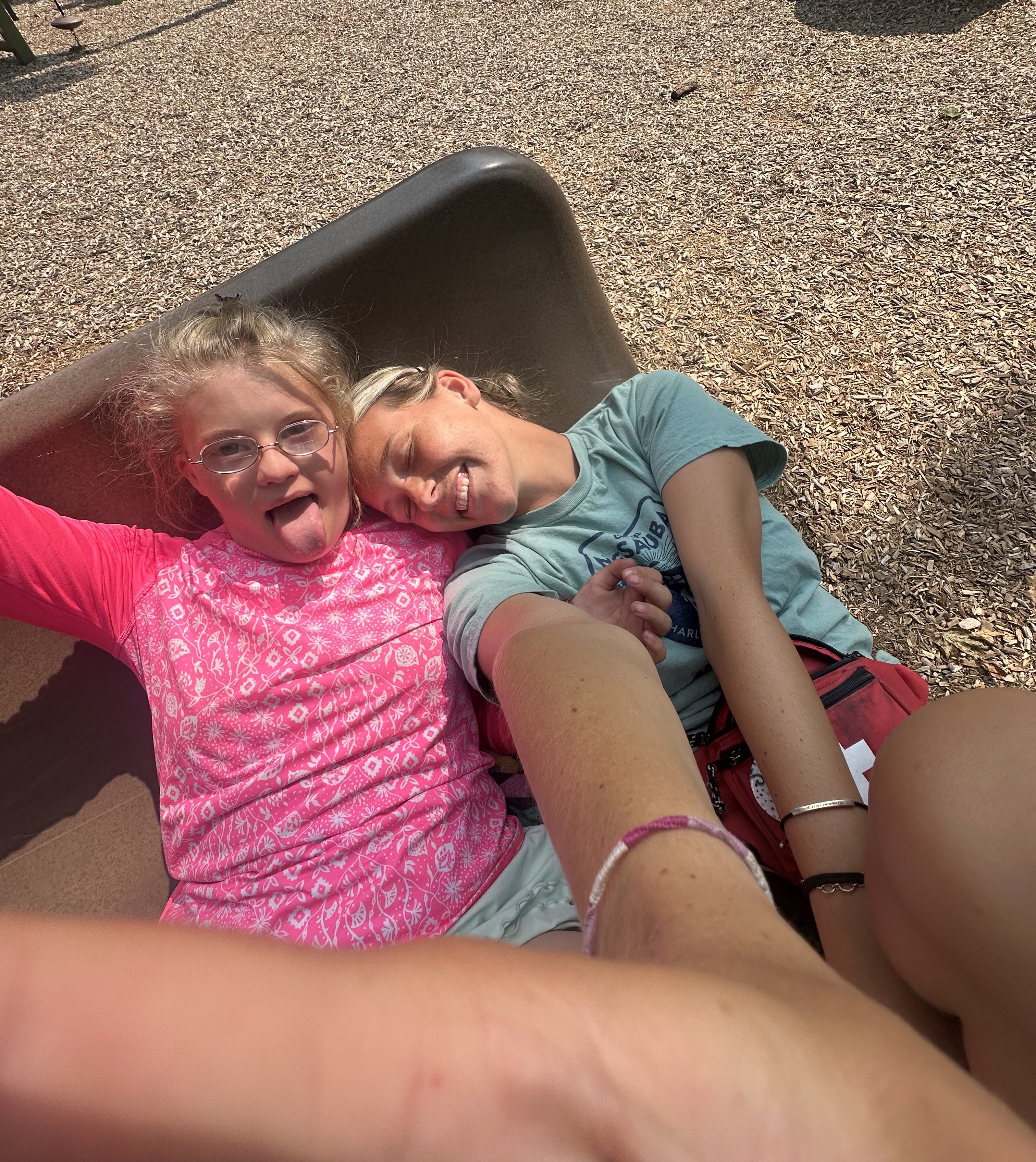
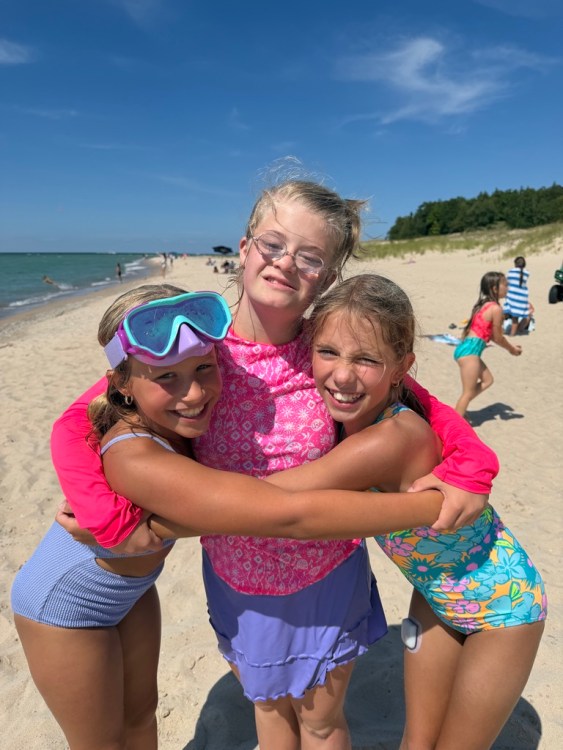
Close relationships develop among camp counselors and children who return every year. Several Camp McSauba counselors were recent high school graduates when Leif and Lyra first attended and I have enjoyed watching these young adults grow and mature alongside my children. One wrote a college paper in which she described how integrating Lyra, who has Down syndrome, at a “typical” day camp benefits everyone.
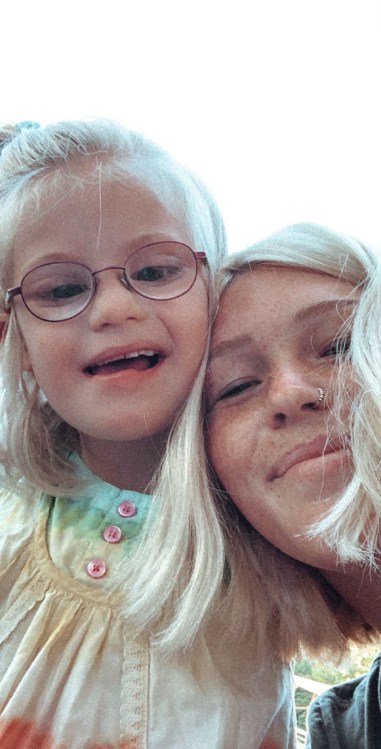
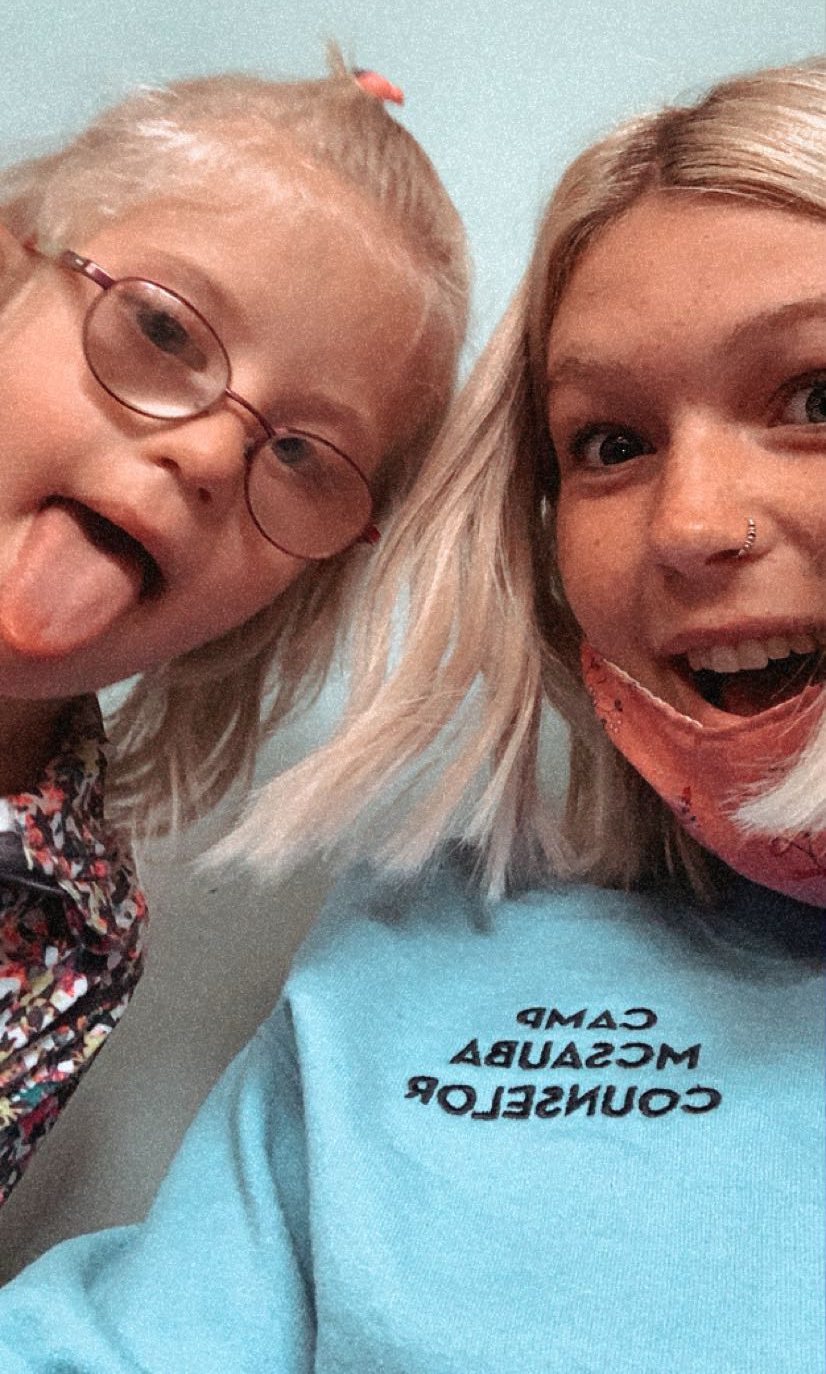
Enrollment for camp is weekly, and children are placed in groups by age. The groups have an assigned counselor (or two, depending upon enrollment numbers) and several often requested Lyra’s group, including sisters Caroline and Ali Jarema. This summer was the first neither of the sisters were counselors because Caroline is now a pediatric occupational therapist and Ali a special ed teacher, both at the local school district where they taught summer school this year. They came to camp after work one day specifically to visit with Lyra.
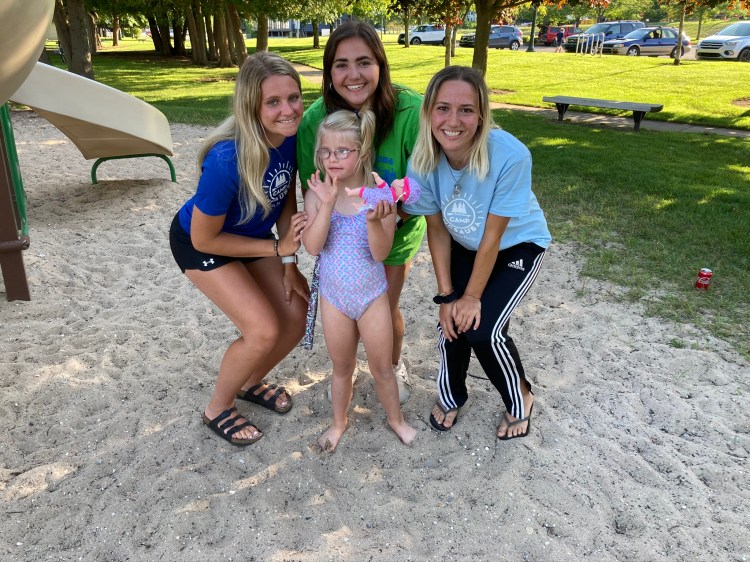
The counselors always fully accepted and integrated Lyra at Camp McSauba. But the first year she attended, that was not true of the director, a woman around my age. No more than 15 minutes after I had dropped off Leif and Lyra on the first day, the director called me. She said Lyra had gotten her socks wet and needed a dry pair and also, “We are not set up for her to be here.”

I returned to camp with a fresh pair of socks and a (polite) piece of my mind. Lyra had spent the previous two years in Akron Public Schools Early Learning Program preschool and was comfortable in group settings. Yet all that director could see was Lyra’s Down syndrome, not a child behaving just like all the other 5-year-old campers. Lyra remained at camp that week, but the director demonstrably never warmed to her, which I found unnerving. I sent Leif alone the following weeks.
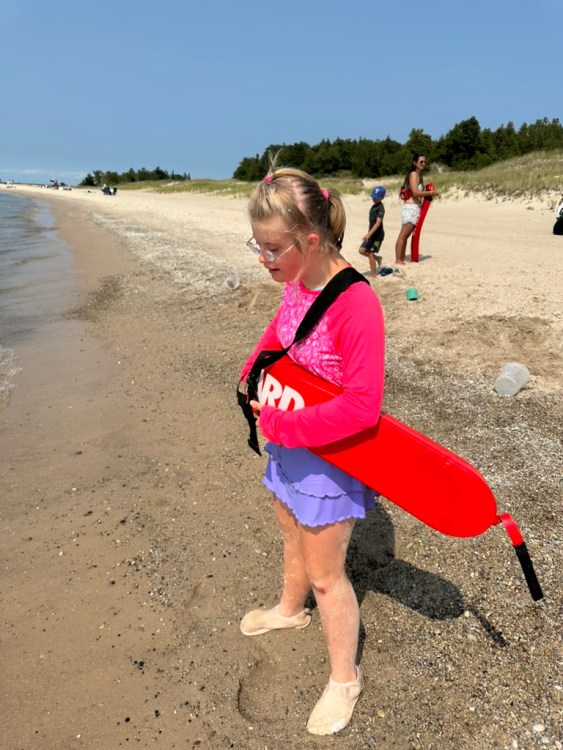
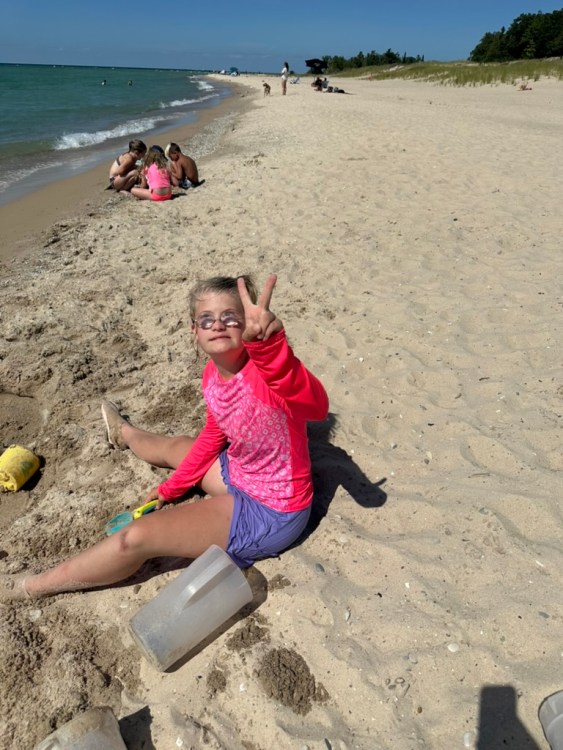
On a spring day when Lyra was perhaps 7, I stood in my kitchen in Akron and watched her struggling to carry a heavy laundry basket filled with dolls.
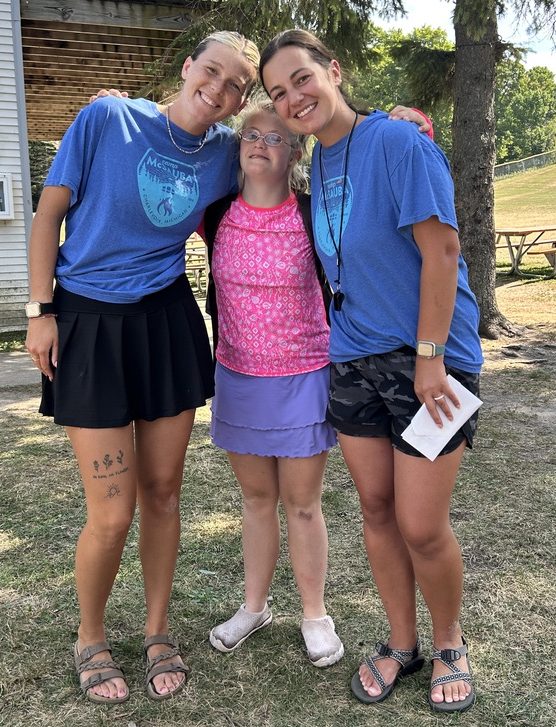
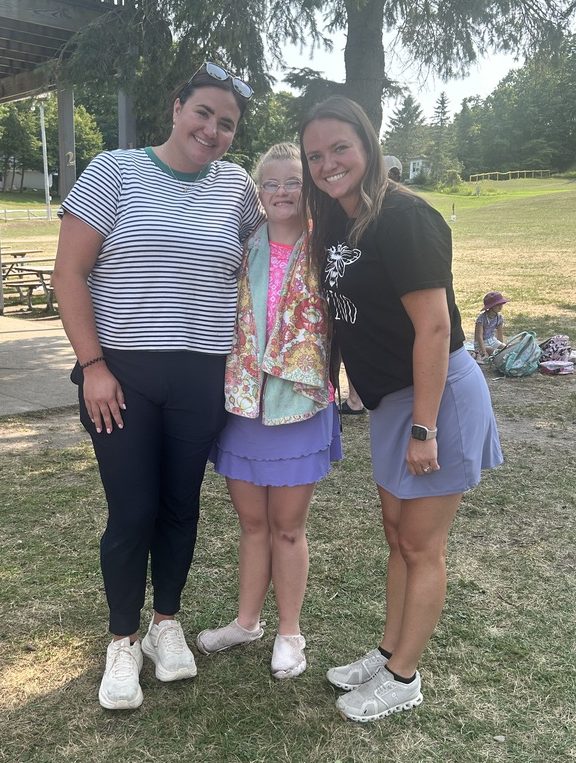
Lyra between camp directors Kirsten Peck and Meredith Walker.

“Where are you taking your babies?” I asked when she reached the back door.

“To Camp McSauba,” she told me before dragging the basket outside. I promptly shared this in a text message with Meredith Walker, the camp director since Lyra’s second year. Her heart melted like mine. Meredith was just 21 when she became camp director in 2019. Since then, she has graduated from college, become a fourth grade teacher, gotten married and, last year, gave birth to her first child.

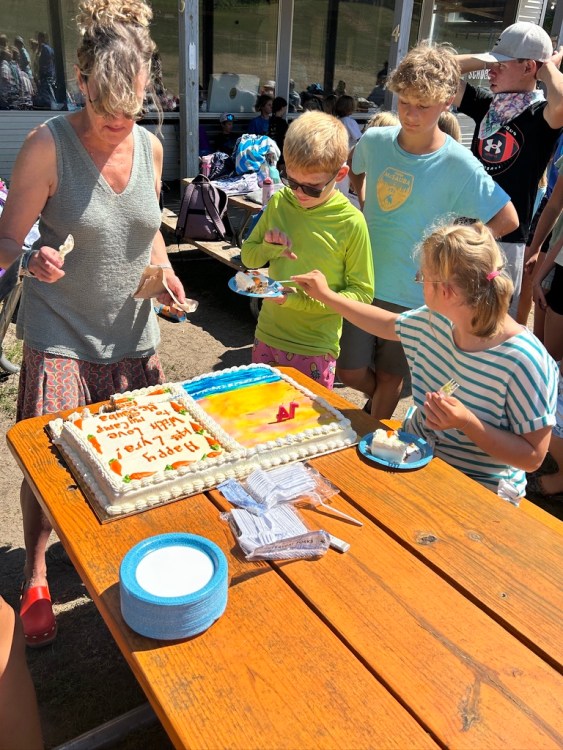
Camp McSauba welcomes children ages 5 through 13. Three summers ago, Leif openly cried on his final day, as did several of the counselors. This year, the last day of camp was also Lyra’s 14th birthday. At lunchtime, I arrived with the largest sheet cake I’ve ever purchased, enough for 70 campers and several counselors. Everyone sang happy birthday to Lyra and, at the end of the day, a graduation ceremony was held for those, including my girl, who will be too old to return next year.
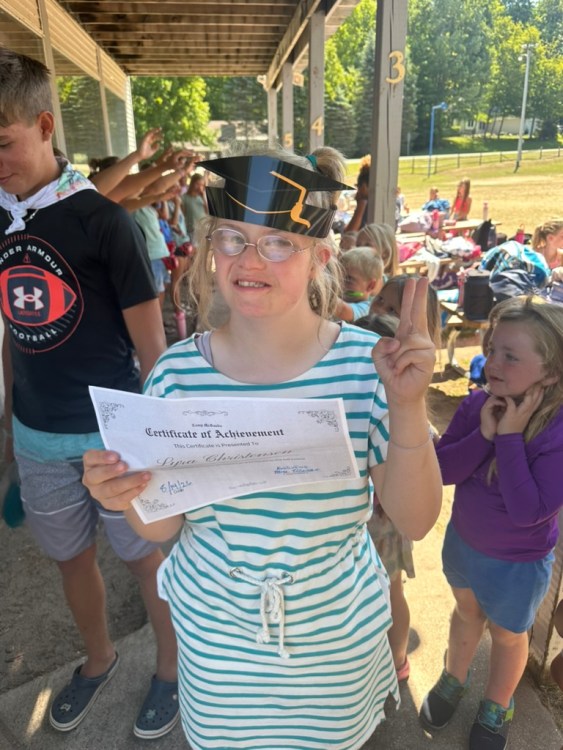
There’s a poignancy like none other when children do things you always wanted them to do, like graduate high school, leave for college or career, choose a life partner, become parents themselves. As my last child, Lyra’s graduation from summer camp marks the end of an era. From time to time we’ll return to Charlevoix as we have many dear friends there. But next summer, instead of picking which weeks to attend camp, we’ll ask, “Where do we want to go this year?”

This column was first published in the Akron Beacon Journal on Sunday, August 23, 2026.

Down syndrome · Education · Parenting & Family · Uncategorized

Lorelei Green touched countless lives

If you had 80 or 90 years on this planet, how many lives do you think you might positively impact? A dozen? Twenty? Those in helping professions may benefit large numbers of people, but what about the rest of us?

Let me tell you about a girl who who managed to touch the lives of almost everyone in Copley in fewer than 12 years.

When Lorelei Green was born to her parents, Kate and Bryan, in February 2014, they were more prepared for a child with Down syndrome than most families. Kate has worked at Ohio developmental disabilities boards throughout her career as a support and service coordinator (case manager), something that helped them hit the ground running.

People with Down syndrome (DS) are at a higher risk of additional medical conditions, and newborns are screened for life-threatening ones. Over 40% have congenital heart defects and they have a higher risk of acute myeloid leukemia. Also common is congenital duodenal atresia, in which the small intestine is either completely separated or blocked, as was the case with Lorelei. It was surgically corrected shortly after her birth.

That would prove to be the first of many surgeries and procedures Lorelei required. Her first year, she had four surgeries to fix a hernia. When she was 3, surgeons implanted a pacemaker and she received hearing aids. And throughout her life, Lorelei was frequently hospitalized for pulmonary issues. But from the get-go, one thing was clear: Lorelei was sassy and always rallied.

Addy Green fixes the hair of her sister, Lorelei, while Lorelei was hospitalized.
Addy Green braiding the hair of her sister, Lorelei, during Lorelei’s recent hospitalization.

When you become the parent of a child with Down syndrome, you automatically join the community of DS families. But that’s not how I met the Greens. Stephanie Kist, a friend of mine from grad school, has triplets who are a month older than my daughter with DS, Lyra. The Kists live near the Greens and their children are friends with Lorelei and her older sister, Addy.  For a few years, we met up at each other’s homes, but that came to a halt when COVID hit. 

In 2021, Bryan, who was an ever-active and present father, suffered a permanent brain injury and resides in a nursing home as a result. Even with support from family and friends, it is far harder to work full time and raise two daughters, one of whom has chronic medical needs, as a single parent. Lorelei’s renowned ability to rally came naturally – she inherited it from her mother.

From left, Lorelei Green with her mom, Kate, and sister, Addy, several years ago.
From the left: Lorelei, her mom, Kate, and sister, Addy, several years ago.

Over time, life mostly settled down for Kate and her daughters. For years, both girls ardently practiced and performed dance at Studio West Performing Arts Center. At Copley schools this fall, Addy started high school while Lorelei began sixth grade. With Addy old enough to babysit and Lorelei stable, Kate and another friend came to my house for dinner last May. A few weeks later, Lorelei’s atlanto-axial joint (C1 and C2) were surgically fused. People with DS are prone to subluxation of their spinal joints and before they ride horses in equine therapy programs, it is strongly recommended that the atlanto-axial joint be examined through an MRI for subluxation because slippage can cause significant, even life-threatening, damage.

Lorelei’s surgery went well, but one day in October she came home from school limping. Two days later, she was at Akron Children’s Hospital, unable to functionally move any of her limbs. I read all of Kate’s posts on Lorelei’s progress. Like most everyone, I believed this was just another medical episode Lorelei would power through like she always has.

As always, her spirit never stopped, but on Jan. 14, her body sadly did. Weddings and funerals are also reunions. But unlike family or class reunions, they bring together people from every corner of the celebrated person’s life. At Lorelei’s service, I saw DS friends from throughout NE Ohio. I also saw my eye doctor, a colleague from the university, a colleague from Akron schools and many other people I had no idea also knew Lorelei.

Two of her classmates gave eulogies. Hattie Pickett was remarkably poised as she described the lunch table at which Lorelei reigned and made all the other students pray, with their eyes closed, before eating. They often peeked precisely to have Lorelei scold them. When William Sloan spoke, his struggle with grief was so great that first his mother, and then Kate, stepped up to the podium to support him. Officers from the Fairlawn Police Department knew Lorelei from working as resources officers at her school buildings. The department posted a tribute to her on their Facebook page. The Copley boys’ basketball teams have worn purple ribbons with Lorelei’s name on them in their recent games.

A memorial fund has been established for Lorelei Green, a beloved Copley girl who died this month at the age of 11.

It wasn’t so long ago that people with Down syndrome, or most other disabilities, were not welcome to attend public schools. Laws passed starting in the 1970s changed that, which has been a tremendous benefit to children with disabilities. But you know what? It’s been a benefit to students without disabilities, too.

Lorelei expanded the lives of her many friends at Copley-Fairlawn City Schools and elsewhere, cultivating in them an abiding empathy. What she taught them is now a part of who her friends are. And Lorelei did this just by being herself.

This column was first published on Sunday, February 1, 2026.