Uncategorized

Hosting out-of-town guest a refresher on all Akron has to offer

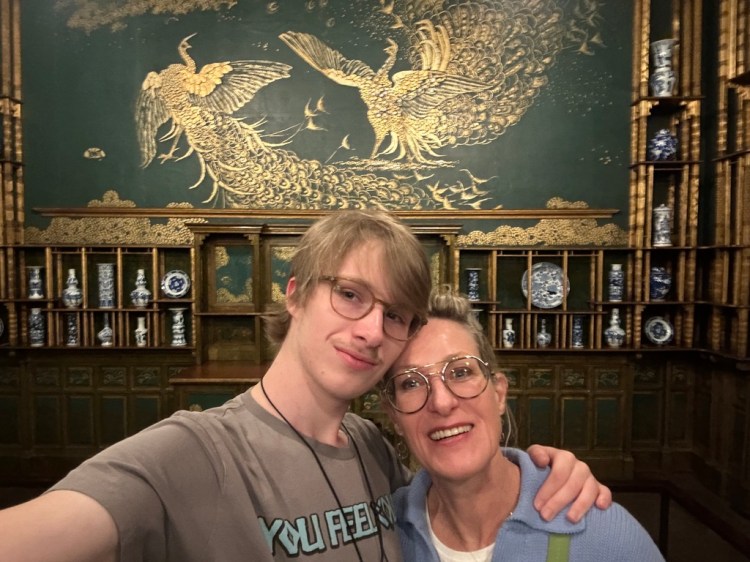
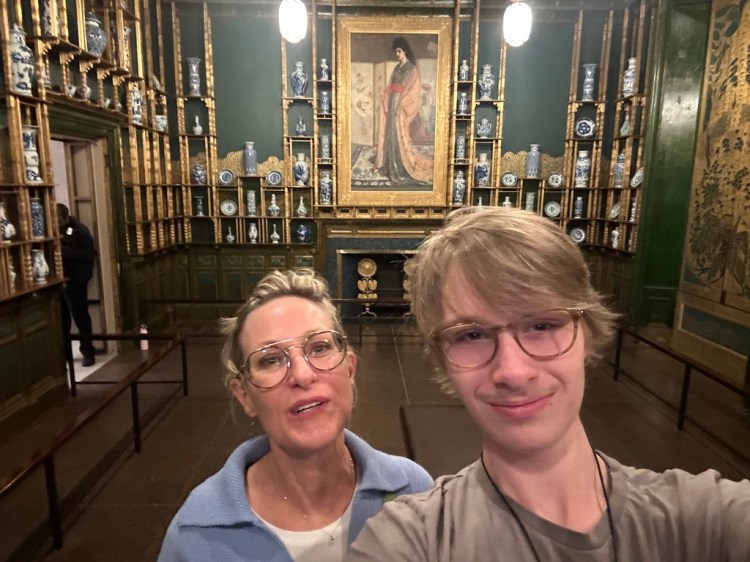
When my youngest son, Leif, and I shared the same spring break last month, we drove to DC and stayed with my eldest son, Claude, who lives just two Metro stops from the National Mall. On our first day we visited the Natural History Museum where it is always, regardless of the day or season, packed cheek to jowl with school-aged children. At the Freer Gallery, I introduced Leif to Whistler’s Peacock Room, which has a history as captivating as its beauty.

The fighting fowls at one end of the former dining room represent Whistler and his patron/enemy, Frederick Richards Leyland. Created in 1876-’77, the entire room was moved from London to American industrialist Charles Freer’s Detroit mansion in 1904. It has been at the Smithsonian since 1923.

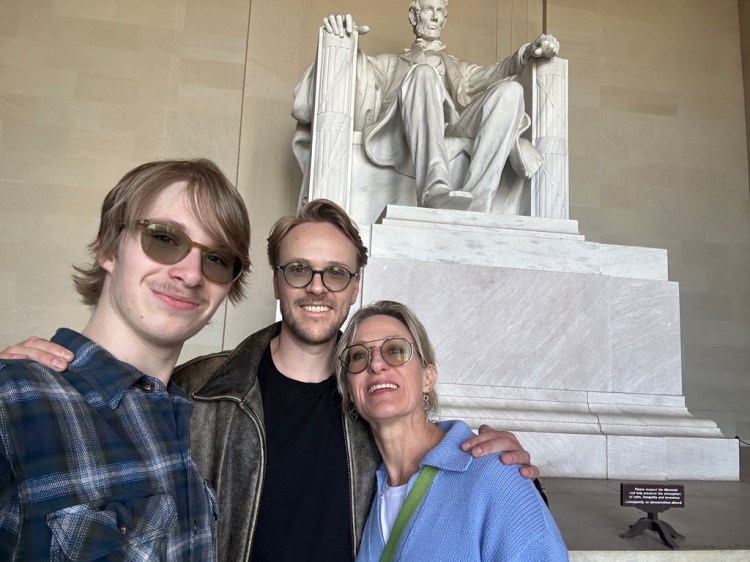
On another day, which was sunny but made frigid by wind gusts I’ve learned are common in DC, my boys and I walked the length of the mall to the Lincoln Memorial, then over to the tidal basin where blossoming cherry trees softly accented the rock-cut memorials to MLK, FDR and Thomas Jefferson.

I have visited DC countless times in my adult life, but it had been 40 years since I’d seen the Lincoln or Jefferson Memorials.

“It’s been since I moved here, four years ago, for me,” Claude told us.

And that’s how it is, isn’t it? It takes an out-of-town visitor for a local to revisit places they are proud exist in their city.

Last April, I did just that. As Akronites know, it can be hard to lure Cleveland-area residents down here, so I was happy when my friend James accepted my offer of a one-day, 5-cent tour of Akron and made the trek from Tremont. After lunch at the Mustard Seed Market Café in Highland Square, we hopped into my 6-speed Venue.

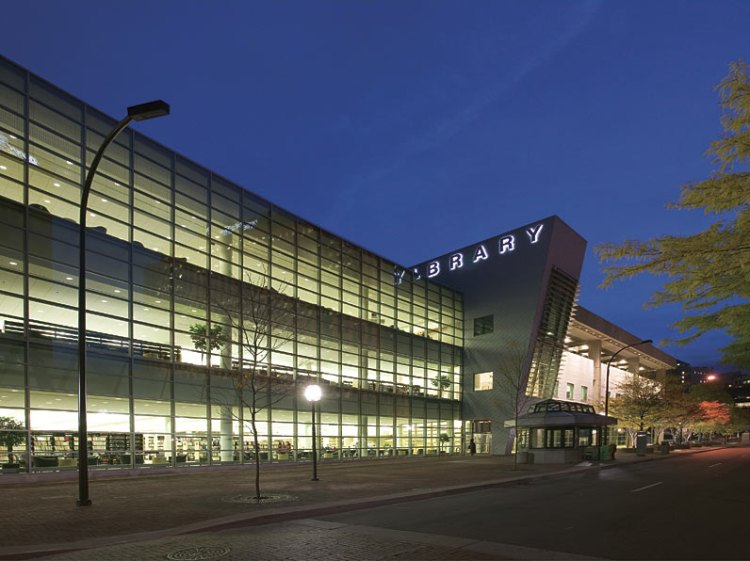
James and I became acquainted through our appreciation of art and design, so naturally the first place I took him to was…the downtown Akron-Summit County Library. In the early 2000s, renovations designed by NYC architecture firm Gwathmey Siegel doubled the library’s size, while making every square foot welcoming, intimate and light-filled.

When turning north onto South Main Street from Cedar Street, large letters that spell the word LIBRARY, which are illuminated at night, seem to magically float above the center of the street.

Main Street is a straight path, but it drifts oh-so-slightly to the west at the block where the library is located on the east side of the street. The designers used this minute angle, and an exterior cantilevering black-marble feature, to create the identifying effect, visible from more than a mile away.

The library’s designers understood most people would enter the building from its underground garage entrance. Just inside is a walkway ramp with stainless steel railings and a floor of brushed glass-block.

But it does not feel sterile or cold. On the right side, long windows framed in light-colored wood punctuate an interior wall separating the ramp from the work tables on the library’s first floor. On the left, floor-to-ceiling exterior window flood the entryway with sunlight ‒ a dramatic ascent into brightness after the dark, cavernous garage.

James and I toured every department in the library before I took him to the hallway outside the auditorium where, hung on the far wall, are two Claire Cressler paintings.

Two Claire Cressler paintings are on display at the Akron-Summit County Public Library Main Library in downtown Akron.

From the library, we walked across the street to the Akron Art Museum.

Three years after the library’s renovation, the art museum also underwent a significant expansion and renovation under the visionary leadership of then-director Mitchell Kahan. A baby-bear-sized museum ‒ not too big, not too small ‒ the Akron Art Museum has a notable permanent collection. When we visited, the temporary exhibit “She said, She said,” with artwork by 37 contemporary women artists, was on display.

As with the library, James was suitably impressed. “Look at all these Cindy Shermans! You know my wife contributed on a Sherman book?” I had not, but neither was surprised.

I then drove James around the University of Akron campus, pointing out the Dale Chihuly statue in the circle outside the Goodyear Polymer Center. Dozens of blue geometric blobs, reminiscent of plastic grocery bags filled with air, cluster around a pole atop a wide concrete cylinder. My four sons call it the “rock candy sculpture” after the wooden sticks with large sugar crystals on one end.

The Dale Chihuly sculpture stands in front of the University of Akron's Goodyear Polymer Center on Monday, April 21, 2025, in Akron, Ohio.

As a steady rain prevented us from walking, I slowly drove the narrow roads of Glendale Cemetery, the final resting place of many of important Akronites, including John Buchtel and Frank Seiberling.

“It’s more impressive than Lake View Cemetery on Cleveland’s east side!” James said, and I agreed.

He then asked, “Did Olmsted design it?” No, but it’s founder modeled it after Boston’s Mount Auburn Cemetery, a place that significantly influenced Frederick Law Olmsted and his park designs.

We tried to end the day at Edgar’s Restaurant, but they were booked for a function (and sadly, are now permanently closed), so I took him to Hop House on High Street, near the spot where Sojourner Truth gave a speech in 1851. We enjoyed beer, along with pizza and salad from Totally Baked Pizzeria, a separate business located next door to Hop House that delivers to the bar.

It was a good day and seeing Akron through the eyes of a newcomer joyfully reminded me why I love living here.

This was first published on Sunday, April 12, 2026 in the Akron Beacon Journal.

Uncategorized

A couple’s 60-year love story still fills my home

Portraits of local artist Claire Cressler and his wife, Gloria, are seen on top of a pile of Cressler’s sketches, Jan. 2, 2026, in Akron, Ohio. Cressler told writer Holly Christensen that he never again sketched after the passing of his wife.
Portraits of Claire Cressler and his wife, Gloria, atop Cressler’s sketches and pen-and-ink drawings of Summit Co. buildings for Great Northern Savings and Loan’s annual calendars.

I was visiting my next door neighbor, Claire Cressler, on his porch one summer afternoon when Jill, our neighbor from across the street, joined us. Claire described how he worked most evenings in the third-floor studio of his house on scrapbooks of his life with his wife of 60 years, Gloria. “They’re not chronological. I just put together different photos and drawings and sometimes sonnets by Shakespeare,” he told us.

Jill asked what makes a sonnet a sonnet and Claire explained.

A couple weeks later, when Claire was leaving my house after having dinner with us, he handed me a folded sheet of paper. He’d written a sonnet but I was to wait until he left to read it, lest he die of embarrassment. A fear unfounded: it was a charming ode to a white lily that had unexpectedly popped out of the soil in Claire’s back garden earlier that summer.

Born in Decatur, Illinois, in 1911, when Claire was in high school he painted posters for the Decatur movie house in a studio under the stage. He’d memorize the entire dialogue of the film that played while creating a poster for the upcoming one.

Claire was an only child and he and Gloria never had children themselves, nor did her brothers. He told me the first time we shared a dinner – at the end of our shared driveways the night the power grid collapsed in 2003, plunging the northeastern quarter of the country into an electricity-free zone – that he didn’t understand why he was still alive three years after Gloria had died.

When he retired, Claire continued to work as an artist, taking commissions, submitting to competitions. For several years he produced pen-and-ink drawings of well-known buildings in Summit County for Great Northern Savings and Loan’s annual calendar. But after Gloria’s death, Claire never again painted or sketched, channeling his creativity instead into scrapbooking.

When beginning a friendship with someone who is 92, it is understood that the duration will be limited. This is true of all relationships, of course, but with someone who has already lived well beyond average life expectancy, it is very much front of mind. And, yet, even as we became close friends, I never asked about, and Claire never volunteered, his end-of-life wishes. 

“When Gloria was in the hospital she asked if I’d sell our home after she died,” Claire shared with me one afternoon as we stood chatting in the driveway. “I told her, ‘No, the house is where we lived and where we loved and I will stay there the rest of my life.’”

I made a grand feast with several courses for Christmas 2007, all of which Claire heartily ate except for the Brussels sprouts because he’d had a lifetime fill of them in the military during World War II. He brought with him that day his ninth sonnet, which I immediately read as he was no longer anxious when sharing them. 

“That’s the last sonnet I’ll ever write,” he told me. It was also his best.

“Wherever you are, my shadow will be / Long as it takes my heart to break / Let Time flow swiftly for you and me / Visit me in dreams while in the dark/ It will comfort me until I embark.”

Eight days after Christmas, Claire called and asked for help. He was in his second-floor bedroom, too sick to walk down the stairs. Pneumonia. An ambulance took him to Akron City Hospital. For a few days, Claire improved. I rubbed his dry skin with cocoa butter and though he was medicated to tolerate intubation, he’d lift his eyebrows as I lotioned his face. 

Claire’s attorney shared a copy of his DNR with the hospital. But Claire did not need resuscitated. When his condition began to deteriorate, the doctors turned to me. It was not likely Claire would survive, we were just letting him linger. But if by some miracle he did, I was told there would be enough lung damage that he’d need a permanent tracheostomy and would have to spend his remaining days in a nursing home.

I recalled his words to me in our driveway. I had his self-declared last sonnet, a call to his beloved wife to come to him. I had his DNR. And so, I solemnly agreed to what Claire’s physicians recommended. On Jan. 8, after a medical team removed Claire’s ventilator, Jill and I softly sang to our friend while holding his hands and stroking his head. In fewer than 10 minutes, he embarked.

In a single plot, Claire’s small box of ashes rests alongside that of Gloria’s. At the burial I read letters of longing they’d written to one another decades earlier when Claire’s employer sent him to work temporarily in Chicago. I now have lived in their house for over five years. The love they shared within its walls continues to resonate.

This column was published in the Akron Beacon Journal on Sunday, January 11, 2026.