
Uncategorized

Violence by federal officers can’t be normalized

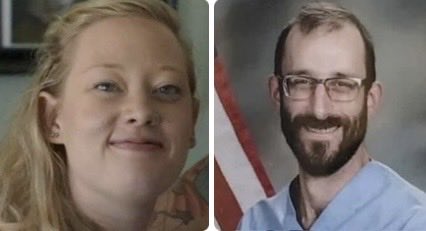
Renee Good and Alex Pretti. Both were killed by ICE agents while peacefully protesting in Minneapolis this month.

Anything can become normalized, including changes in people, health and relationships. And adapting to change is generally a desirable goal. Changes can also occur, and normalize, with governments, borders, peace and war.

When I was born, America and the USSR were in a lengthy Cold War that defined almost every aspect of American foreign policy. But then, when I was 26, the Soviet Union dissolved like mounds of snow in an early spring rain, and what had seemed an entrenched world order quickly washed away. 

Not so long ago, residential neighborhoods in the United States were visited by hyper-militarized law enforcement only when violent crimes were in process, such as active-shooter or hostage situations. Police SWAT teams, trained in such high-risk operations, have been around since the 1960s but their specialized services are infrequently required.

The United States of America, my country, has become unrecognizable in the past year.

Yes, we have known for decades that police departments too often lie about the excessive use of violence. When everyone began carrying cell phones with state-of-the-art video cameras, police brutality became harder to cover up. And, yes, our government has fabricated reasons to invade countries (Iraq, 2003) and influence military coups of democratically elected leaders of other nations (Chile, 1973), none of which were beneficial to any country, including our own, in the long run.

At home, however, we could believe noble principles still prevailed.

The preamble of the Declaration of Independence, penned by Thomas Jefferson 250 years ago, begins, “We hold these truths to be self-evident, that all men are created equal, that they are endowed by their Creator with certain unalienable Rights, that among these are Life, Liberty and the pursuit of Happiness.” Subsequent citizens, including Dr. Martin Luther King Jr., have pushed our nation to make these words a reality, that all people should experience equal opportunity, liberty and justice, and laws be fairly upheld and administered.

The same year our Founding Fathers signed the Declaration of Independence, Thomas Paine published “Common Sense,” a widely read and influential pamphlet in which he wrote, “For as in absolute governments the king is law, so in free countries the law ought to be king; and there ought to be no other.”

But today, our nation is run by a scofflaw, bent on dismantling America’s foundational ideals.

Inspectors general were dismissed days after President Trump’s inauguration. The Department of Justice and many of the courts have been packed with loyalists and are no longer independent and free from political influence. Civil servants, who for more than 140 years have been hired strictly on a merit-based system to avoid political corruption, have been fired capriciously. Entire agencies and departments that were created by Congress, and which only Congress can legally eliminate, have been rendered non-existent by work-around executive orders.

The congressional majority has proven itself more concerned about Trump’s ire than upholding their oath of office to “support, defend, and bear true faith and allegiance to the U.S. Constitution against all enemies, foreign and domestic.”

In one year, the invasion of American cities by poorly trained, militarily armed ICE (Immigration and Customs Enforcement) officers, whom Trump and many in his administration publicly call to be violently aggressive as they descend mostly upon Democratic cities, has become commonplace. They are not responding to active, “hot” crimes, but hunting down in war-like fashion immigrants in their homes simply for the crime of being in our country. Immigration is a perennial problem that everyone can agree needs solving, but terrorizing entire cities for the passive crime of being here illegally is akin to using a machine gun to kill mosquitoes and does the opposite of increase safety in our streets.

An investigation into the Jan. 7 murder of Renee Good in Minneapolis by an ICE agent will not yield accurate findings because, in order to control all findings, Trump’s Justice Department has blocked Minnesota’s state investigators from doing their jobs. In response to this disturbingly biased approach, six federal prosecutors resigned this past week. To watch videos of an ICE officer shooting Good in the head and then read the administration’s spin to not believe what your eyes see or your ears hear is as Orwellian as it gets.

While the end of the Soviet Union was a positive disruption to the world order, what we are witnessing now is not. The disruption of the foundational principles of our nation, which have guided this country through turmoil and prosperity, must not become normalized, for if it does, the 250-year-old American experiment will perish.

This column, first published in the Akron Beacon Journal on Sunday, January 18, 2026, is now more urgent in light of the killing of ICU nurse Alex Pretti by ICE on January 24.

Uncategorized

Trump earns an F for abolishing the Department of Education

When the Department of Education (DOE) was created in 1979, President Jimmy Carter warned supporters, “This thing won’t work as well as you think it will.” Time has shown his prediction accurate, however, not working as well as thought is not the same as working badly. 

Just what does the Department of Education do? Many things.

The department oversees federal funding for colleges and universities as well as K-12 public schools. The bulk of federal funding for higher education comes in the form of Pell Grants, student loans and research funding. Most K-12 schools receive 10% of their funding from the department but as recently as the 2021-2022 school year, it was 14.6% for Ohio schools, or $2,600 per student. 

Two DOE programs support school districts with the greatest needs. Title 1 helps fund supports for schools with high-poverty rates while REAP (Rural Education Achievement Program) specifically targets rural schools, which comprise more than a quarter of all U.S. public schools. My job as a tutor in an Akron Public Schools building with high-poverty rates is paid for with Title 1 funding. I see first hand the need for this support and how impactful it is.

The department also provides federal oversight for the Individuals with Disabilities Education Act (IDEA). Enacted in 1975, IDEA’s role is to ensure all states provide a free appropriate public education to students with disabilities both physical and intellectual. Within the department is the Office for Civil Rights to which students with disabilities can file complaints if they are not receiving a free appropriate public education as outlined by IDEA.

When I graduated high school in the spring of 1983, I had attended 10 public schools in four states. In none of these did I have classmates with intellectual disabilities, such as Down syndrome, nor physical disabilities that required wheelchairs or adaptive equipment. This changed in the years after IDEA federally required public schools to allow students with disabilities to attend, something that doesn’t just benefit students with disabilities. It also normalizes having friends with a range of abilities as students work and play with classmates who only a few decades ago were not encouraged, or sometimes even allowed, to attend public schools.

Just as important to know is what the Education Department does not do. It does not set curricula (what is taught) in public schools. It does not determine how schools receive funding outside of what it provides. It does not set standards for teachers nor graduation requirements. All of this is, and always has been, decided by the states.

On March 11, the Trump Administration put more than 1,300 DOE employees on administrative leave. The agency’s statisticians who analyze the data to determine which school districts qualify for Title 1 and REAP funding went from 100 to three employees, making it impossible to efficiently and effectively conduct their assigned task. The expected result is the funding for schools that rely on Title 1 and REAP will not be allocated and, therefore, distributed going forward.

Then, on March 20, President Donald Trump signed an executive order charging Education Secretary Linda McMahon to “take all necessary steps to facilitate the closure” of the department, “to the maximum extent appropriate and permitted by law.” And to give “the authority over education to the States and local communities.” Which is something they already have now. Trump also promised that the funding for Title 1 and REAP would remain intact, but with the department gutted of the employees who oversee the allocation of said funding, it remains intact in name only.

No president can constitutionally eliminate an agency established by Congress — only Congress itself can do that. But officially closing an agency isn’t the only way to kill it. Lawsuits have been filed by 21 Democratic state attorneys general and parents. The state AGs’ suit claims the massive reduction of Education Department employees is the de facto death of the Education Department, while the lawsuit by parents claims the cuts mean student rights will not be protected. 

As a parent advocate for the nonprofit Oklahoma Parents for Student Achievement, Kristy Heller has worked with the DOE’s Office for Civil Rights on behalf of Oklahoma families whose children have not received the public education required by IDEA. Also a mother of a child with Down syndrome, Heller told an NPR interviewer that her family is considering moving because without federal oversight “states like Oklahoma…I don’t feel place the same importance on educating students with disabilities.” 

Here in Ohio, I worry that Akron Public Schools may eliminate or significantly water down the SAIL program my daughter with Down syndrome attends. This program, designed for students with intellectual disabilities who attend about half of the day in a general education classroom, has been a game changer for my daughter’s education. Like Kristy Heller, I am not confident that my state will carry on the work of educating students with disabilities without federal oversight and funding.

Secretary McMahon has said IDEA will remain in place but perhaps at a different governmental agency — none of which have been prepared to take over such a large and important federal act. Nor could they possibly have been in the two months since Elon Musk and Donald Trump began dismantling several federal governmental agencies. It is far easier to break things than it is to repair or rebuild them. And just who benefits from this wide-scale destruction? Certainly not America’s students.