Uncategorized

‘When the frost is on the punkin,’ enjoy the sights and smells of autumn

“They’s something kindo’ harty-like about the atmusfere
When the heat of summer’s over and the coolin’ fall is here—
Of course we miss the flowers, and the blossums on the trees,
And the mumble of the hummin’-birds and buzzin’ of the bees;
But the air’s so appetizin’; and the landscape through the haze
Of a crisp and sunny morning of the airly autumn days
Is a pictur’ that no painter has the colorin’ to mock—
When the frost is on the punkin and the fodder’s in the shock.”

Years ago, I gave each of my children $5 once they’d memorized Hoosier poet James Whitcomb Riley’s homage to autumn, “When the Frost Is on the Punkin.” The verses are my delightful ear worm every fall. Like a seasonal soundtrack, the lines randomly erupt from my lips in the car, on walks or wherever I take in the sights and smells of the season.

This past spring, when it seemed it would rain forever, my yard was fenced in to keep neighborhood dogs from leaving me unwanted presents while also keeping my dogs from dining at a buffet of cat food one neighbor daily places on the ground. Though installed as a matter of function, the fence immediately gave the feeling of outdoor “rooms” in my now private yard.

I didn’t birth several sons because of how much labor they could one day provide, but it’s worked out nicely. My adult children returned home Memorial Day Weekend to paint fences both new and old, refinish patio furniture, divide and reposition hydrangeas along the new fence and plant new trees and bushes, including a genie magnolia. The sodden spring ensured everything we planted was happily established by mid-summer when drought set in.

Every morning, I meet up with other dog owners in a park where we walk two miles with our eager pups. Once the drought hit, I spent half an hour watering the gardens after each morning walk. And while the drought prevented the dogs from becoming muddy, it turned the trails into fine dust that water alone cannot wash off their fur. I stationed a vat of dog shampoo next to my hose in July and my three dogs quickly became accustomed to the post-walk wash drill.

As happens most years, we had a brief foretaste of autumn at the end of August before the heat of summer returned. The first weeks of September, I arose at dawn to get the dogs to the park before the sun yanked the mercury up. Yet because it was September, the days grew shorter and the last heat wave of the year could not settle in for an extended stay.

When the heat lifted and autumn truly began, the last stanza of Riley’s poem, where he declares that if angels were to come a-calling he’d want them to arrive this time of year, resonated as it always does. Tree leaves first hint at, then explode in a color show. Sunlight becomes golden; nights are cool enough to leave the windows open. If you kept up with watering, many flowers continue to bloom, particularly dahlias and zinnias. All of this makes it a joy to be outside for any reason and I’ve served more meals on my patio in the past five weeks than I had in the prior five months.

The first autumn I lived in Akron, it snowed on Oct. 4. I remember standing in my house slack-jawed at the sight of flurries outside. More than two decades later, winter consistently arrives later and leaves earlier. Climate change is a fact with horrible consequences, which is why I feel a twinge of shame for relishing the mild weather that now gloriously extends well into October.

My 15-year-old son, Leif, has loved Halloween from the moment he was old enough to understand it. Every year, he’d want to set up Halloween decorations as soon as school started but I’d make him wait until the last weekend of September. This year, I hung a glittery skull face on the front door but it seems Leif has outgrown his passion for all things Halloween − except dressing up in a costume. Plastic skeletons, ghouls and zombie flamingos remain boxed up in the garage while chainmail and swords go on the boy. 

Everything transitions.

However glorious and temperate autumn is, its poignant beauty heralds the coming death, albeit temporary, of garden, leaves and grass. Soon we will stay mostly indoors, where some of us will eagerly plan next year’s gardens. Snow will arrive, bringing its own sparkling beauty, blanketing the earth while she rests, collecting energy for spring and all that it, too, brings.

This was first published in the Akron Beacon Journal on Sunday, October 26, 2025.

Uncategorized

Fall in Northeast Ohio is a treasure

The return of children to school in late August always sneaks up on me. It’s still summer, vegetable gardens are at peak production, swimming pools are open and filled with cavorting water babies of all ages. Soon thereafter, however, Mother Nature usually sends Northeast Ohio a save-the-date sample of autumn weather. This year, it arrived last weekend. Sweaters, jeans and ankle boots were pulled out after months of wearing T-shirts, skirts and sandals.

Fall in my part of the world is a treasure. Forests filled with trees of multihued leaves rival any found in New England. The humidity, which is never that bad here, evaporates altogether leaving cerulean skies decorated with pretty clouds unique, in my observations, to the Great Lakes region.

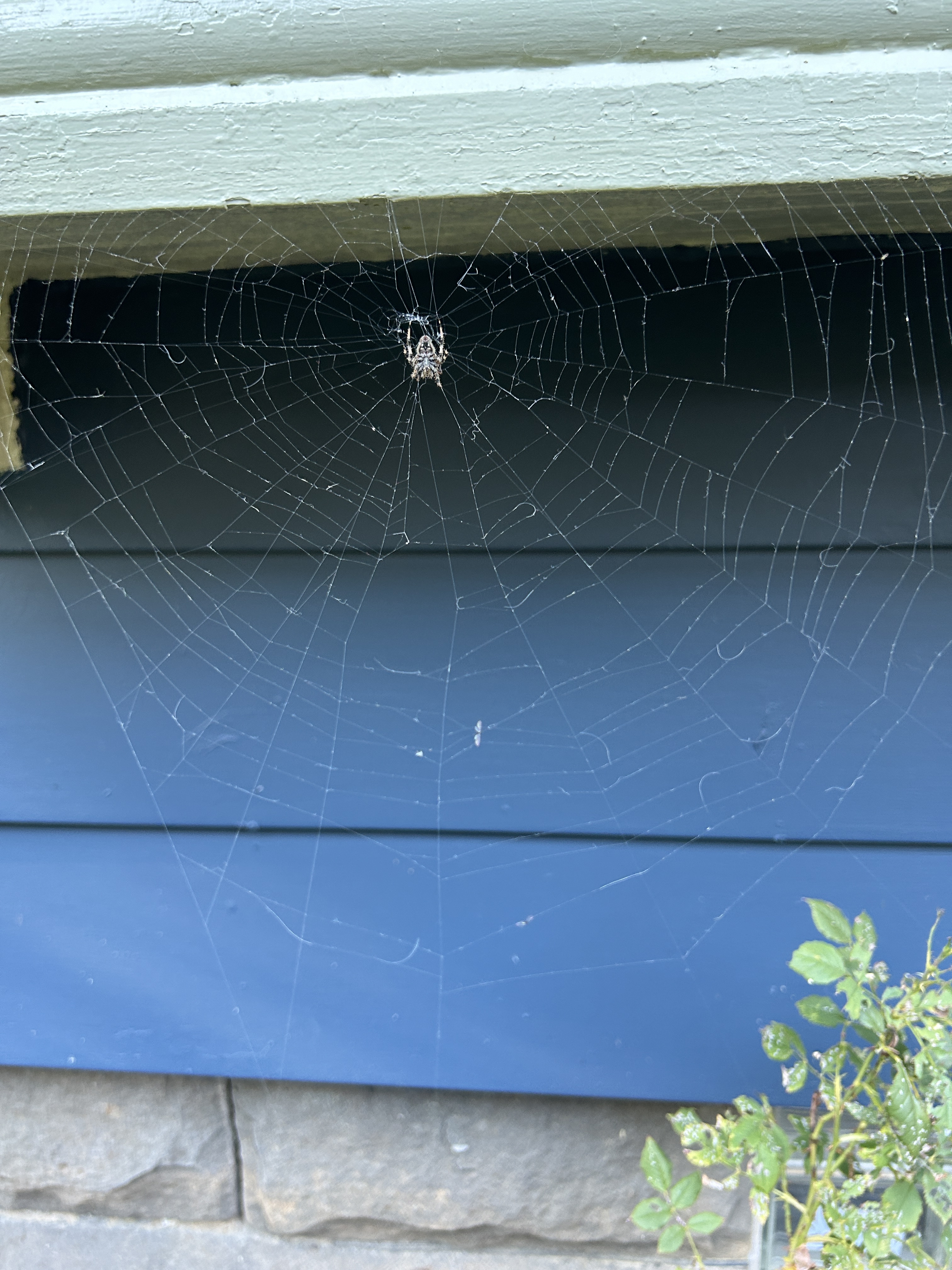
And yet, unlike the other season of dramatic change, spring, there is a poignancy to fall. Summer flora is winding down and though it will be many weeks before the last garden bloom turns brown and gifts its seeds to the ground for the coming year, some are already wrapping up their colorful shows. Crickets chirp ever longer each day and spiders have gone berserk making webs like Amish barn builders in competition.

The term spring cleaning comes from an era when homes were heated with wood and coal, fuel that left ash and soot throughout a home. When the cold of winter receded for the warm, wet days of spring, it was time to take down curtains and wash them along with bedding, rugs, windows, floors, walls and all the contents found under a roof.

Springtime fills me with an urgency to go outside and garden. It is fall, in which I make way for everything that must come inside, that has me sorting and editing my possessions. Garages need cleaned out to make space for outdoor furniture. Potted plants, including some flowers, such as begonias, need interior real estate near sun-filled windows. Closets are culled of items outgrown, worn out or plainly no longer in style (though that last one becomes less of a concern with time and age).

One of my favorite things to haul inside is the produce I’ve grown, gotten in my CSA share or purchased at a farmer’s market. I spend several weekends putting up the sweet tastes of summer while imagining the joy it will bring when served on future cold and snowy nights.

Jars of peaches that I canned last year, the succulent syrup sweetened with local honey, still fill an entire shelf in my cellar. I’m glad of this because I’m not sure when I’d have time to put up a new bushel given all else I need to process. This has been a banner year for just about everything in the garden, both flower and vegetable.

Across the United States, people have raved about 2024’s hydrangea blooms and mine are no exception. Two tree-like hydrangeas have for years provided the most delightful privacy scrim when I sit on my front porch. Bouquets of their flowers have filled vases for several weeks, and I’ve also given many to friends. But you could never tell looking at them as they remain laden with white blossoms the shape of grape clusters. In the backyard, round hydrangea bushes produced the first flowers since 2020 — round, multicolored blossoms.

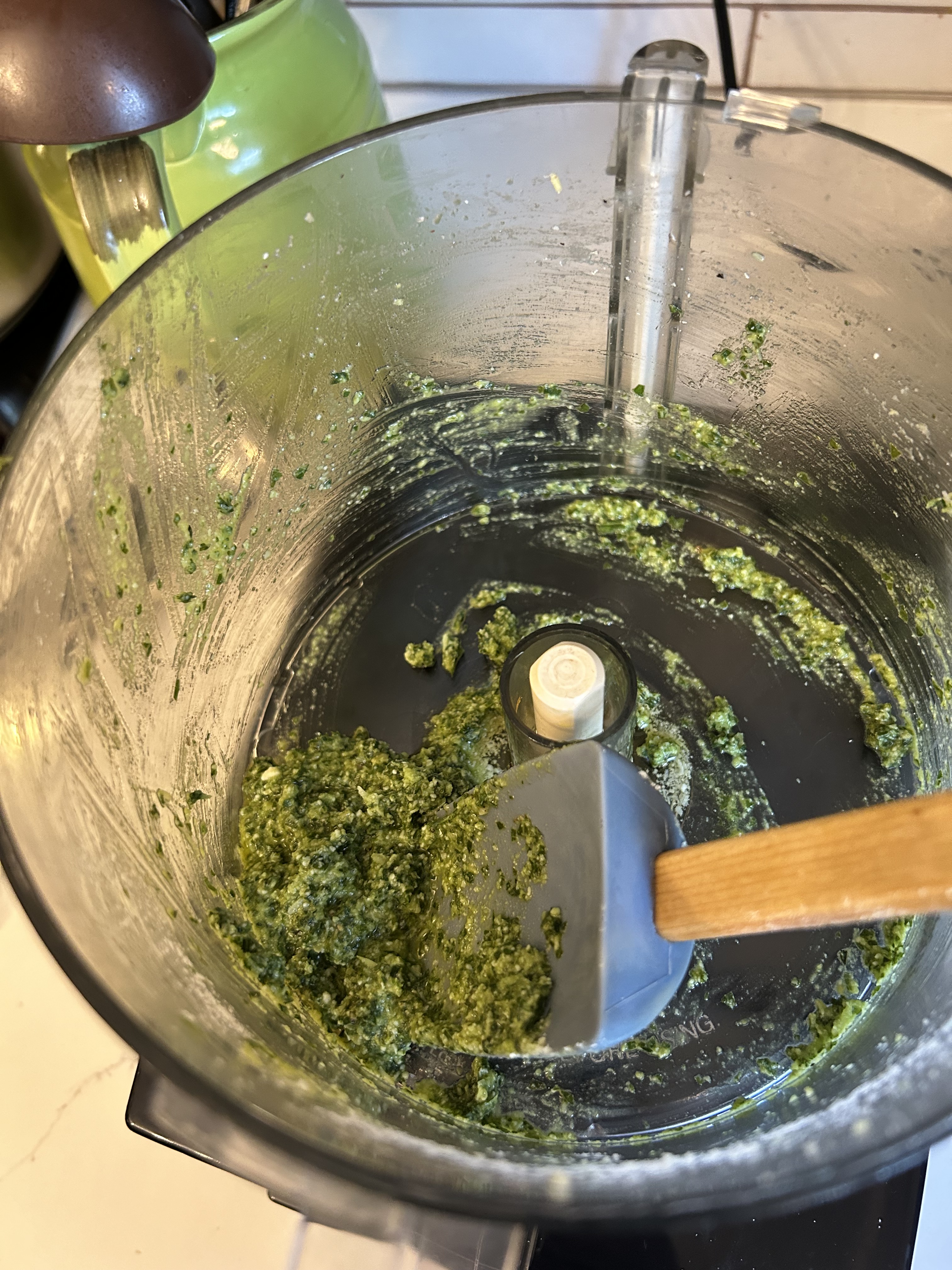
The past several years, I planted several basil plants, mostly Genovese, only to have them fizzle by mid July no matter how much I watered them. Remembering that, I only bought three plants this year, which was a good call because they each grew a yard high, nearly as wide, with leaf-covered branches. A batch of pesto requires two tightly packed cups of basil leaves. I’ve put up two batches and easily have enough basil left for three or more batches.

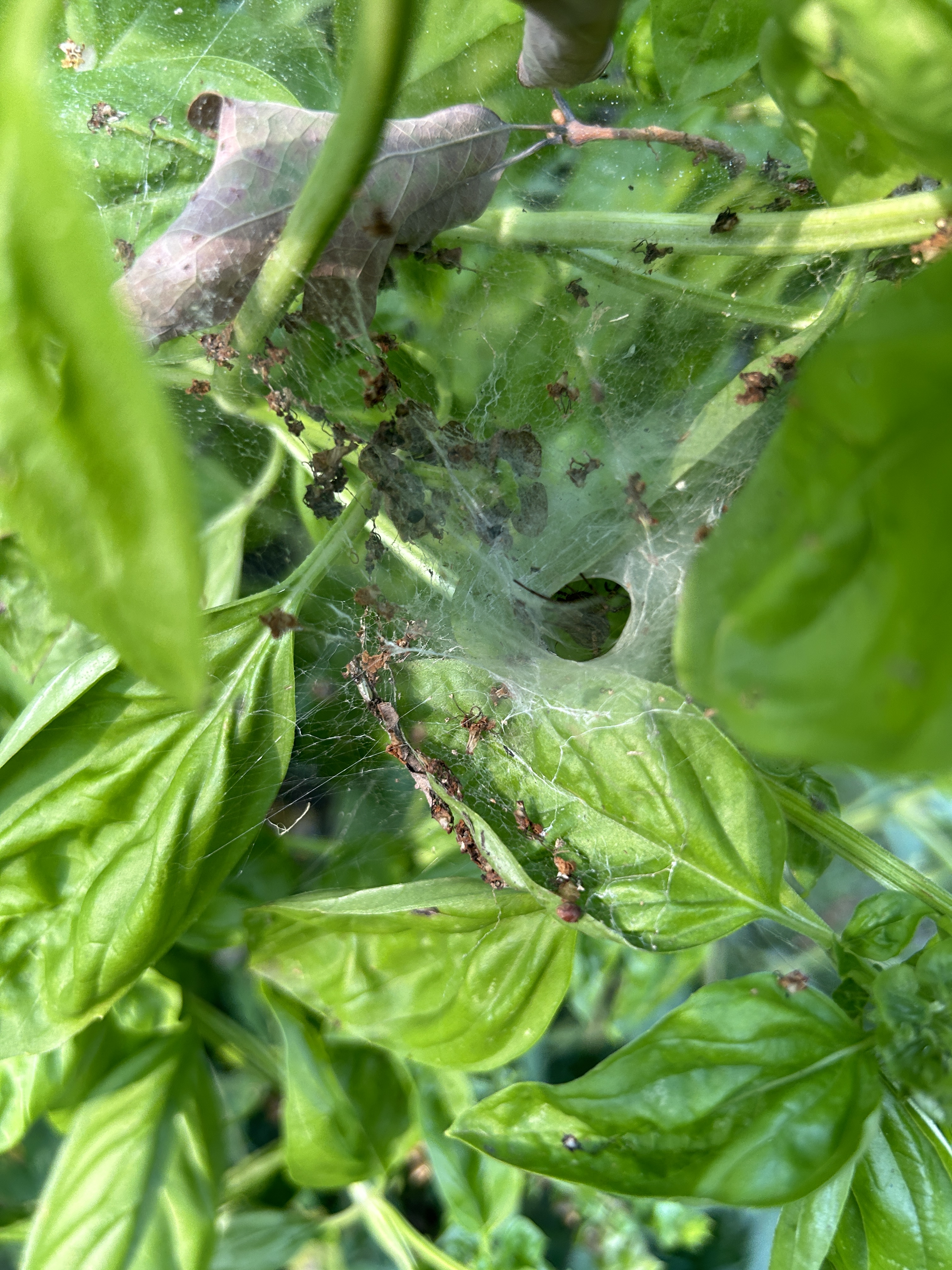
Established on a section of one basil plant is an intricate funnel web and its arachnid weaver, a member of the Agelenidae family. Unlike many people, spiders don’t bother me. Quite the opposite — I admire their handiwork and industry in hunting and devouring pesky arthropods, i.e., insects like Japanese beetles.

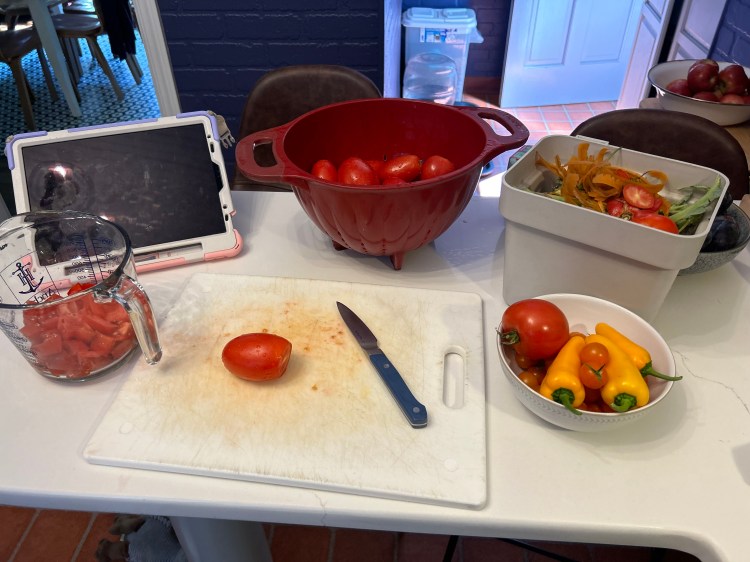
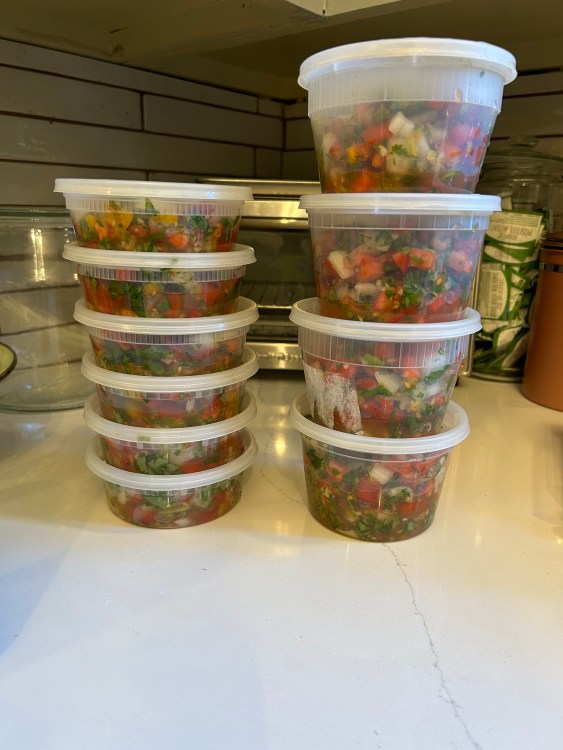
Last Sunday, I put on a new-to-me album, “Another Dimension” by pianist Charles Bell and the Contemporary Jazz Quartet (1963), and then spent the better part of the afternoon chopping tomatoes, onions, peppers (hot and mild), cilantro and garlic. I squeezed the juice of several limes, mixed it all together with freshly ground Himalayan salt and when I had finished, salsa filled an 8-quart pot.

I took one of several containers of my salsa fresca straight away to my next-door neighbors. They ate half of it with chips and used the other half to make meat loaf, a slice of which they gave me the next day when returning my container.

And I think to myself, whatever the season, life in my Akron home is good.

This was first published in the Akron Beacon Journal on Sunday, September 15, 2024.

Uncategorized

Annual return of hollyhocks welcome reminder of old friend

Every Mother’s Day, my children wash my car and help me plant flowers. Last week, as I prepared the garden beds of my two side-by-side homes, I found one of what I call “Claire’s hollyhocks” growing where it didn’t belong and relocated it alongside its cohorts. 

One morning in the spring of 2005, my next-door neighbor, Claire Cressler, walked over to chat while I gardened. Our century-old homes have a feature that zoning ordinances long ago disallowed: a shared driveway. Twenty years ago, our yards were populated with oak trees (two dramatically fell over, roots and all, in the years since), leaving scarcely a sunny spot for flowers to grow. The best place was in the narrow strip of earth between the side of my home and our shared driveway. 

When he joined the Army in World War II, Claire was 5-foot-7, but after 95 years of gravity tugging on his frame, he was a good bit shorter than me.  He drove to the barber’s every four weeks to trim his impressively thick, white hair. On either side of a well-groomed goatee, Claire’s cheeks were jowly and usually clean-shaven. A retired artist, Claire’s clothes were old, but stylish. That day he wore a plaid shirt, Levis and a cowboy belt. As always when we talked, Claire immediately began turning up the volume in his right ear.

Claire Cressler at Holly Christensen's house in June 2005 to celebrate her son Jules' fifth birthday,
Claire visiting for dinner a few weeks after his roundabout request for hollyhocks.

“How’s your garden coming?  Do you have all your plants in?” he asked.

“I still have a flat of coleus to put in pots on the patio, but I’m done here on the side of the house.” 

I was happy to see Claire outside. He’d had shingles earlier that spring and I was concerned by how long it took him to recover. In previous springs, he’d do a little yard work every day, neatly bundling yard waste with twine. That year, his yard was littered with the debris continuously dropped by mature oaks: catkins, acorns, leaves, twigs and the occasional branch. Dead hydrangea flowers and iris leaves from the previous summer hadn’t been cut back. Geraniums he had wintered in his basement had yet to return to their summer home on his back stoop.

“Say, do you know what flower I liked as a boy?”

“No,” I answered, “What?”

“Hollyhocks.”

“Really?” I asked. A flower of a bygone era, hollyhocks had diminished in popularity long before I was born.

“Yeah, I know many people think they are a crude flower, but I always liked them.” Oddly enough, the day before I had seen packets of heirloom hollyhock seeds at Crown Point Ecology Center. Written on the back of the packets was the flower’s history.

“You know, Claire, I read that hollyhocks were a favorite flower to plant around outhouses. Do you suppose that’s why they were considered crude?”

“Well, now, that could be,” he said. “I remember when I was a boy, I liked to walk home from school through the alleyways and I would always see hollyhocks growing along the back fences of peoples’ yards.”

“Were there still many outhouses in Decatur when you were a boy?”

“Oh, sure. We called them Chic Sales.”

“Chicksalls?” I asked.

“No, Chic Sales,” he responded, adding emphasis to the separation of the two words. “Chic Sale was a comedian of sorts who told jokes about outhouses, so people started calling the outhouses Chic Sales after him and they called him The Specialist because he, well, specialized in outhouses.”

“Wait, was this before radio?”

“Oh, sure,” he again answered.

“So was Chic Sale a vaudevillian?” I asked, curious how a man’s name became to outhouses what Kleenex is to tissue.

“No,” answered Claire, “I don’t recall that he did vaudeville, he might’ve, I suppose.  His jokes were in books that adults would talk about but wouldn’t let us kids read.”

“Can you tell me any?” I asked.  

“It’s been so long, I can’t remember exactly. I recall he talked about outhouses with grand descriptions of their architecture and the crescent moon on the doors. He also had jokes about the trains going through Arkansas.”

“Arkansas?” I asked.

“Yes. You see in those days, they had boys that went up and down the train cars selling nuts and crackers and that sort of thing. Well, on a train through Arkansas, Chic Sale sees an old man selling this stuff and he asks him, ‘Aren’t you supposed to be a boy?’ and the old man replies, ‘Well, I was when we started out.’” I chuckled.

“It was a slow train, you see,” Claire explained in case I didn’t get it.  “But you know, I really did think those hollyhocks were special when I’d see them, they just made me smile.”

Sometimes I’m a bit slow on the draw. It suddenly occurred to me why Claire had come out to discuss hollyhocks while I was gardening.

“Claire, would you like me to plant some hollyhocks along the driveway?

Some of Claire’s 2024 hollyhocks.

“Well, that’d be all right, I suppose.”  A few days later I told him I had planted his seeds.

“Oh, show me where you put them, so as I know where to look.” 

“I put most of them under my kitchen window where you can see them when you are at your kitchen sink.”

“Well, that’ll be just fine.”

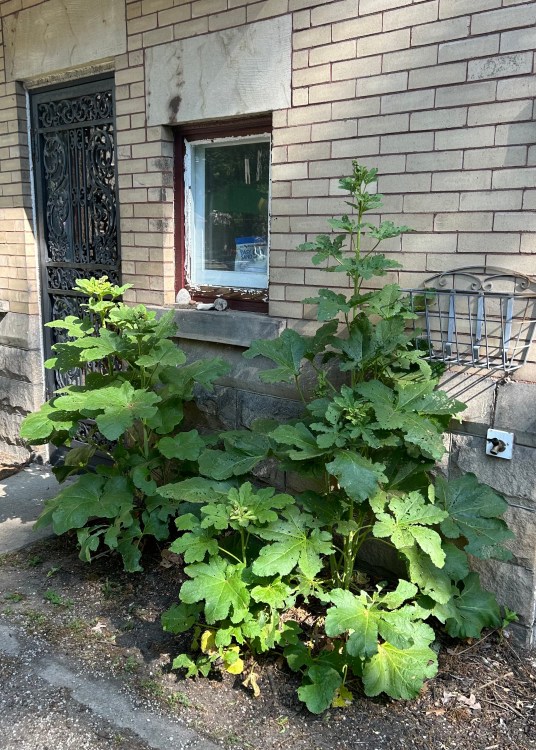
Hollyhocks reseed themselves, returning each year. They start out as bushy mounds of broad leaves, not unlike rhubarb. By June, the center stalks will have shot up 6-to-8 feet. Throughout the summer, the stalks will be covered in large, multi-colored blossoms. Today, I live in Claire’s house and from what is now my kitchen window, I enjoy seeing the descendants of that first packet of hollyhock seeds. Claire’s hollyhocks.

This column was first published in the Akron Beacon Journal on Sunday, May 12, 2024.