
Uncategorized

Violence by federal officers can’t be normalized

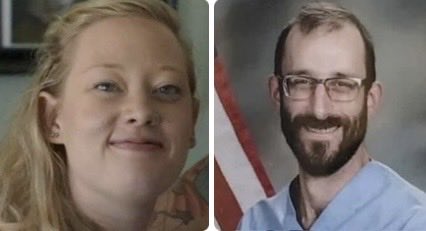
Renee Good and Alex Pretti. Both were killed by ICE agents while peacefully protesting in Minneapolis this month.

Anything can become normalized, including changes in people, health and relationships. And adapting to change is generally a desirable goal. Changes can also occur, and normalize, with governments, borders, peace and war.

When I was born, America and the USSR were in a lengthy Cold War that defined almost every aspect of American foreign policy. But then, when I was 26, the Soviet Union dissolved like mounds of snow in an early spring rain, and what had seemed an entrenched world order quickly washed away. 

Not so long ago, residential neighborhoods in the United States were visited by hyper-militarized law enforcement only when violent crimes were in process, such as active-shooter or hostage situations. Police SWAT teams, trained in such high-risk operations, have been around since the 1960s but their specialized services are infrequently required.

The United States of America, my country, has become unrecognizable in the past year.

Yes, we have known for decades that police departments too often lie about the excessive use of violence. When everyone began carrying cell phones with state-of-the-art video cameras, police brutality became harder to cover up. And, yes, our government has fabricated reasons to invade countries (Iraq, 2003) and influence military coups of democratically elected leaders of other nations (Chile, 1973), none of which were beneficial to any country, including our own, in the long run.

At home, however, we could believe noble principles still prevailed.

The preamble of the Declaration of Independence, penned by Thomas Jefferson 250 years ago, begins, “We hold these truths to be self-evident, that all men are created equal, that they are endowed by their Creator with certain unalienable Rights, that among these are Life, Liberty and the pursuit of Happiness.” Subsequent citizens, including Dr. Martin Luther King Jr., have pushed our nation to make these words a reality, that all people should experience equal opportunity, liberty and justice, and laws be fairly upheld and administered.

The same year our Founding Fathers signed the Declaration of Independence, Thomas Paine published “Common Sense,” a widely read and influential pamphlet in which he wrote, “For as in absolute governments the king is law, so in free countries the law ought to be king; and there ought to be no other.”

But today, our nation is run by a scofflaw, bent on dismantling America’s foundational ideals.

Inspectors general were dismissed days after President Trump’s inauguration. The Department of Justice and many of the courts have been packed with loyalists and are no longer independent and free from political influence. Civil servants, who for more than 140 years have been hired strictly on a merit-based system to avoid political corruption, have been fired capriciously. Entire agencies and departments that were created by Congress, and which only Congress can legally eliminate, have been rendered non-existent by work-around executive orders.

The congressional majority has proven itself more concerned about Trump’s ire than upholding their oath of office to “support, defend, and bear true faith and allegiance to the U.S. Constitution against all enemies, foreign and domestic.”

In one year, the invasion of American cities by poorly trained, militarily armed ICE (Immigration and Customs Enforcement) officers, whom Trump and many in his administration publicly call to be violently aggressive as they descend mostly upon Democratic cities, has become commonplace. They are not responding to active, “hot” crimes, but hunting down in war-like fashion immigrants in their homes simply for the crime of being in our country. Immigration is a perennial problem that everyone can agree needs solving, but terrorizing entire cities for the passive crime of being here illegally is akin to using a machine gun to kill mosquitoes and does the opposite of increase safety in our streets.

An investigation into the Jan. 7 murder of Renee Good in Minneapolis by an ICE agent will not yield accurate findings because, in order to control all findings, Trump’s Justice Department has blocked Minnesota’s state investigators from doing their jobs. In response to this disturbingly biased approach, six federal prosecutors resigned this past week. To watch videos of an ICE officer shooting Good in the head and then read the administration’s spin to not believe what your eyes see or your ears hear is as Orwellian as it gets.

While the end of the Soviet Union was a positive disruption to the world order, what we are witnessing now is not. The disruption of the foundational principles of our nation, which have guided this country through turmoil and prosperity, must not become normalized, for if it does, the 250-year-old American experiment will perish.

This column, first published in the Akron Beacon Journal on Sunday, January 18, 2026, is now more urgent in light of the killing of ICU nurse Alex Pretti by ICE on January 24.

Uncategorized

A couple’s 60-year love story still fills my home

Portraits of local artist Claire Cressler and his wife, Gloria, are seen on top of a pile of Cressler’s sketches, Jan. 2, 2026, in Akron, Ohio. Cressler told writer Holly Christensen that he never again sketched after the passing of his wife.
Portraits of Claire Cressler and his wife, Gloria, atop Cressler’s sketches and pen-and-ink drawings of Summit Co. buildings for Great Northern Savings and Loan’s annual calendars.

I was visiting my next door neighbor, Claire Cressler, on his porch one summer afternoon when Jill, our neighbor from across the street, joined us. Claire described how he worked most evenings in the third-floor studio of his house on scrapbooks of his life with his wife of 60 years, Gloria. “They’re not chronological. I just put together different photos and drawings and sometimes sonnets by Shakespeare,” he told us.

Jill asked what makes a sonnet a sonnet and Claire explained.

A couple weeks later, when Claire was leaving my house after having dinner with us, he handed me a folded sheet of paper. He’d written a sonnet but I was to wait until he left to read it, lest he die of embarrassment. A fear unfounded: it was a charming ode to a white lily that had unexpectedly popped out of the soil in Claire’s back garden earlier that summer.

Born in Decatur, Illinois, in 1911, when Claire was in high school he painted posters for the Decatur movie house in a studio under the stage. He’d memorize the entire dialogue of the film that played while creating a poster for the upcoming one.

Claire was an only child and he and Gloria never had children themselves, nor did her brothers. He told me the first time we shared a dinner – at the end of our shared driveways the night the power grid collapsed in 2003, plunging the northeastern quarter of the country into an electricity-free zone – that he didn’t understand why he was still alive three years after Gloria had died.

When he retired, Claire continued to work as an artist, taking commissions, submitting to competitions. For several years he produced pen-and-ink drawings of well-known buildings in Summit County for Great Northern Savings and Loan’s annual calendar. But after Gloria’s death, Claire never again painted or sketched, channeling his creativity instead into scrapbooking.

When beginning a friendship with someone who is 92, it is understood that the duration will be limited. This is true of all relationships, of course, but with someone who has already lived well beyond average life expectancy, it is very much front of mind. And, yet, even as we became close friends, I never asked about, and Claire never volunteered, his end-of-life wishes. 

“When Gloria was in the hospital she asked if I’d sell our home after she died,” Claire shared with me one afternoon as we stood chatting in the driveway. “I told her, ‘No, the house is where we lived and where we loved and I will stay there the rest of my life.’”

I made a grand feast with several courses for Christmas 2007, all of which Claire heartily ate except for the Brussels sprouts because he’d had a lifetime fill of them in the military during World War II. He brought with him that day his ninth sonnet, which I immediately read as he was no longer anxious when sharing them. 

“That’s the last sonnet I’ll ever write,” he told me. It was also his best.

“Wherever you are, my shadow will be / Long as it takes my heart to break / Let Time flow swiftly for you and me / Visit me in dreams while in the dark/ It will comfort me until I embark.”

Eight days after Christmas, Claire called and asked for help. He was in his second-floor bedroom, too sick to walk down the stairs. Pneumonia. An ambulance took him to Akron City Hospital. For a few days, Claire improved. I rubbed his dry skin with cocoa butter and though he was medicated to tolerate intubation, he’d lift his eyebrows as I lotioned his face. 

Claire’s attorney shared a copy of his DNR with the hospital. But Claire did not need resuscitated. When his condition began to deteriorate, the doctors turned to me. It was not likely Claire would survive, we were just letting him linger. But if by some miracle he did, I was told there would be enough lung damage that he’d need a permanent tracheostomy and would have to spend his remaining days in a nursing home.

I recalled his words to me in our driveway. I had his self-declared last sonnet, a call to his beloved wife to come to him. I had his DNR. And so, I solemnly agreed to what Claire’s physicians recommended. On Jan. 8, after a medical team removed Claire’s ventilator, Jill and I softly sang to our friend while holding his hands and stroking his head. In fewer than 10 minutes, he embarked.

In a single plot, Claire’s small box of ashes rests alongside that of Gloria’s. At the burial I read letters of longing they’d written to one another decades earlier when Claire’s employer sent him to work temporarily in Chicago. I now have lived in their house for over five years. The love they shared within its walls continues to resonate.

This column was published in the Akron Beacon Journal on Sunday, January 11, 2026.