Uncategorized

Fall in Northeast Ohio is a treasure

The return of children to school in late August always sneaks up on me. It’s still summer, vegetable gardens are at peak production, swimming pools are open and filled with cavorting water babies of all ages. Soon thereafter, however, Mother Nature usually sends Northeast Ohio a save-the-date sample of autumn weather. This year, it arrived last weekend. Sweaters, jeans and ankle boots were pulled out after months of wearing T-shirts, skirts and sandals.

Fall in my part of the world is a treasure. Forests filled with trees of multihued leaves rival any found in New England. The humidity, which is never that bad here, evaporates altogether leaving cerulean skies decorated with pretty clouds unique, in my observations, to the Great Lakes region.

And yet, unlike the other season of dramatic change, spring, there is a poignancy to fall. Summer flora is winding down and though it will be many weeks before the last garden bloom turns brown and gifts its seeds to the ground for the coming year, some are already wrapping up their colorful shows. Crickets chirp ever longer each day and spiders have gone berserk making webs like Amish barn builders in competition.

The term spring cleaning comes from an era when homes were heated with wood and coal, fuel that left ash and soot throughout a home. When the cold of winter receded for the warm, wet days of spring, it was time to take down curtains and wash them along with bedding, rugs, windows, floors, walls and all the contents found under a roof.

Springtime fills me with an urgency to go outside and garden. It is fall, in which I make way for everything that must come inside, that has me sorting and editing my possessions. Garages need cleaned out to make space for outdoor furniture. Potted plants, including some flowers, such as begonias, need interior real estate near sun-filled windows. Closets are culled of items outgrown, worn out or plainly no longer in style (though that last one becomes less of a concern with time and age).

One of my favorite things to haul inside is the produce I’ve grown, gotten in my CSA share or purchased at a farmer’s market. I spend several weekends putting up the sweet tastes of summer while imagining the joy it will bring when served on future cold and snowy nights.

Jars of peaches that I canned last year, the succulent syrup sweetened with local honey, still fill an entire shelf in my cellar. I’m glad of this because I’m not sure when I’d have time to put up a new bushel given all else I need to process. This has been a banner year for just about everything in the garden, both flower and vegetable.

Across the United States, people have raved about 2024’s hydrangea blooms and mine are no exception. Two tree-like hydrangeas have for years provided the most delightful privacy scrim when I sit on my front porch. Bouquets of their flowers have filled vases for several weeks, and I’ve also given many to friends. But you could never tell looking at them as they remain laden with white blossoms the shape of grape clusters. In the backyard, round hydrangea bushes produced the first flowers since 2020 — round, multicolored blossoms.

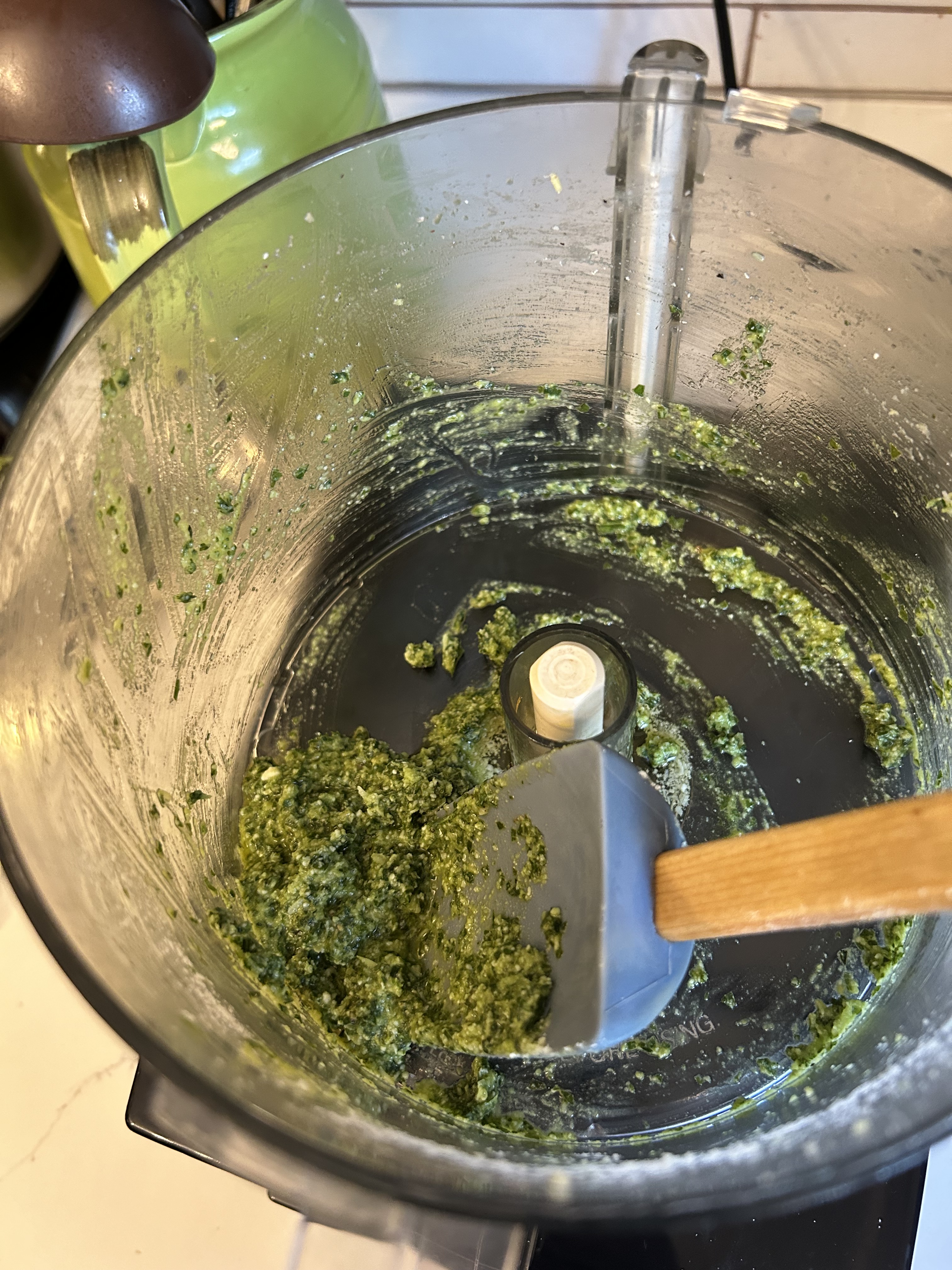
The past several years, I planted several basil plants, mostly Genovese, only to have them fizzle by mid July no matter how much I watered them. Remembering that, I only bought three plants this year, which was a good call because they each grew a yard high, nearly as wide, with leaf-covered branches. A batch of pesto requires two tightly packed cups of basil leaves. I’ve put up two batches and easily have enough basil left for three or more batches.
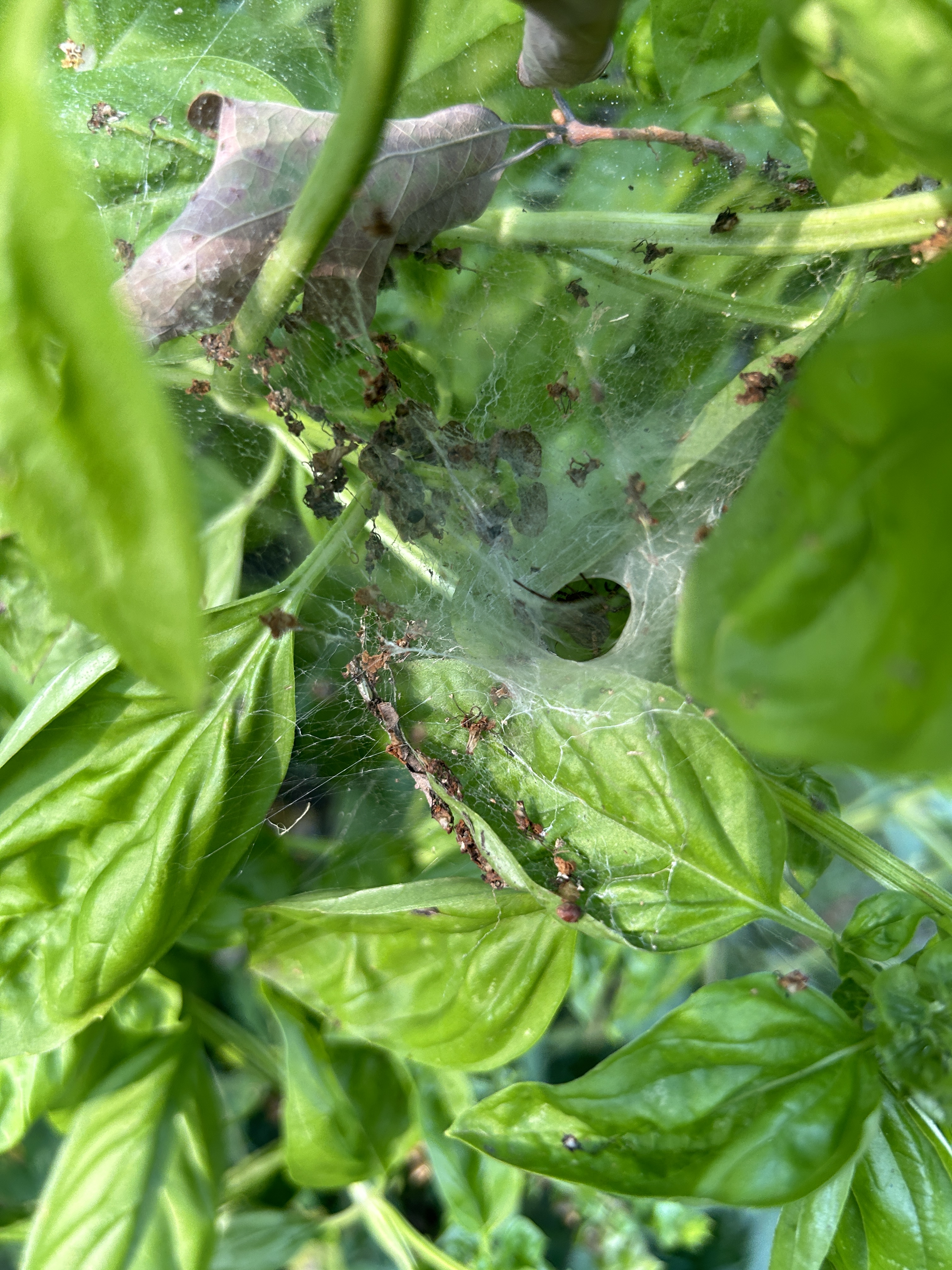
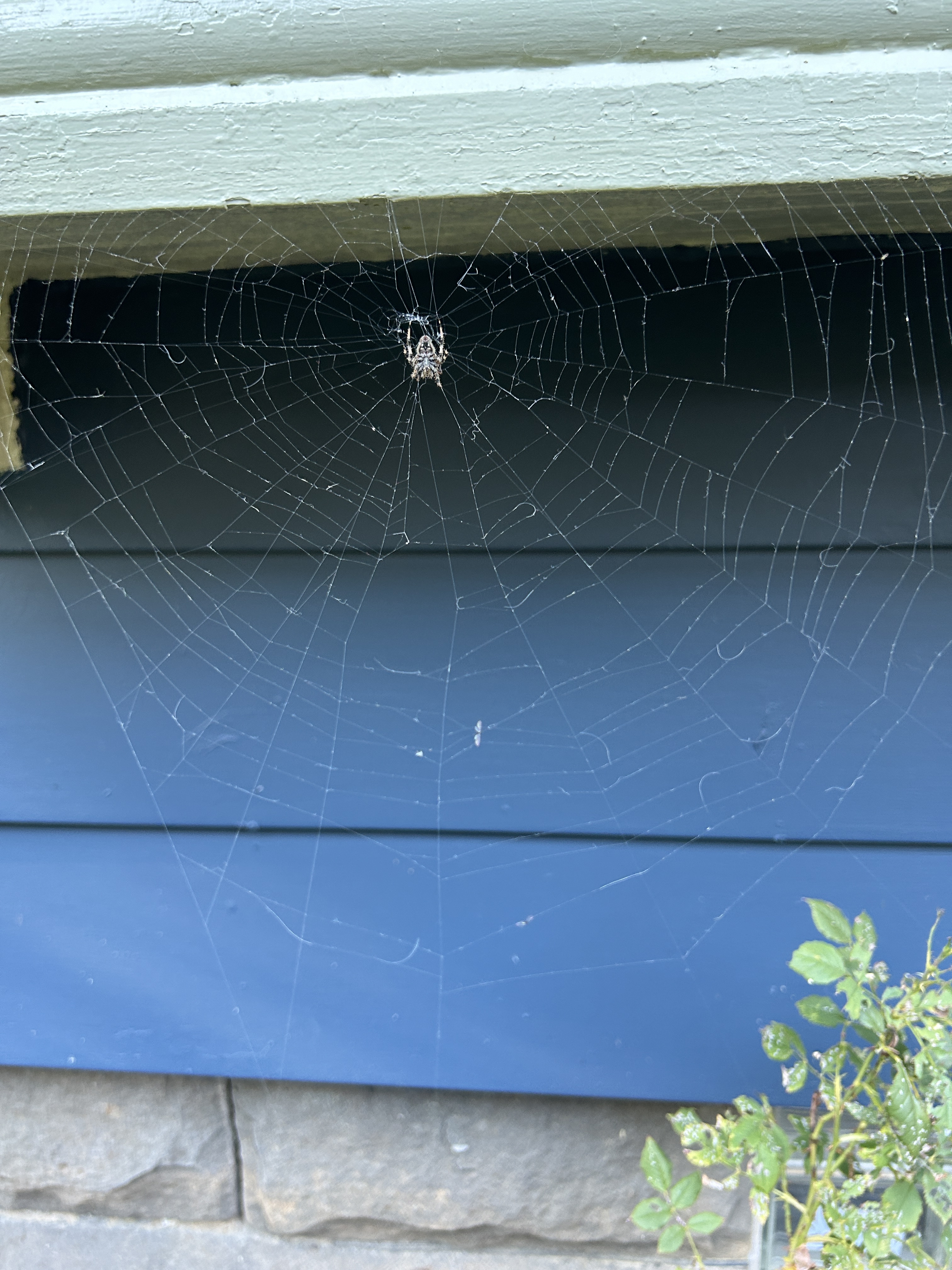
Established on a section of one basil plant is an intricate funnel web and its arachnid weaver, a member of the Agelenidae family. Unlike many people, spiders don’t bother me. Quite the opposite — I admire their handiwork and industry in hunting and devouring pesky arthropods, i.e., insects like Japanese beetles.

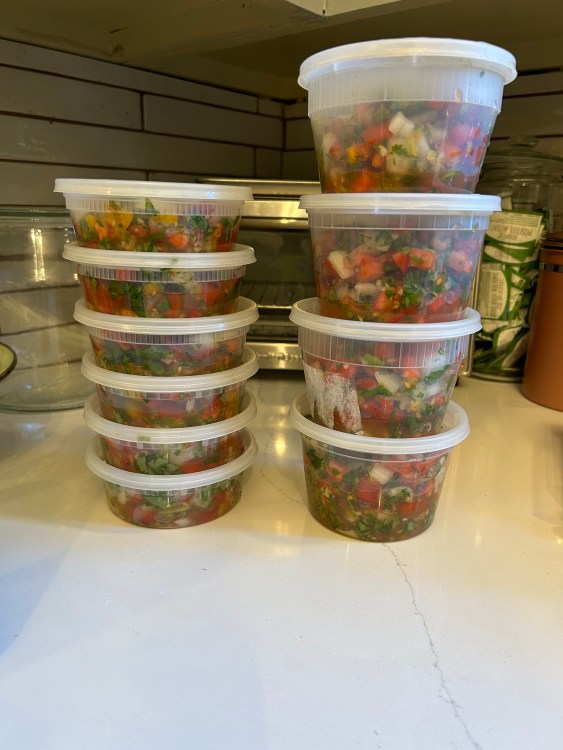
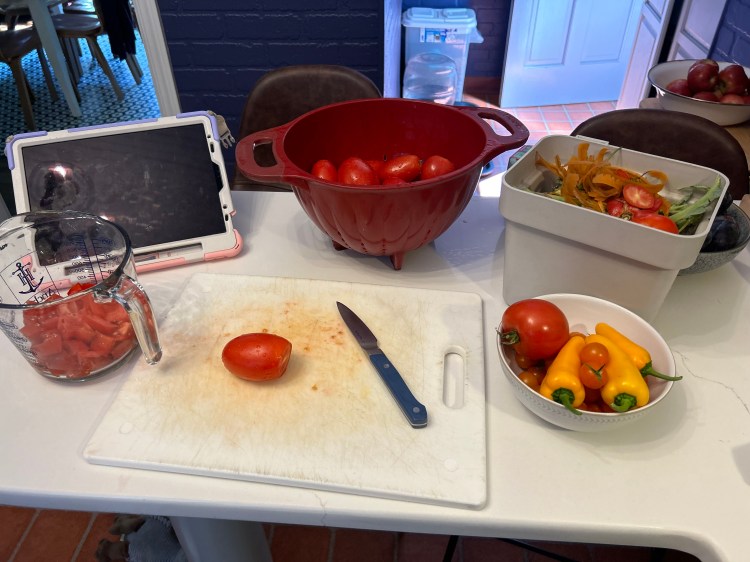
Last Sunday, I put on a new-to-me album, “Another Dimension” by pianist Charles Bell and the Contemporary Jazz Quartet (1963), and then spent the better part of the afternoon chopping tomatoes, onions, peppers (hot and mild), cilantro and garlic. I squeezed the juice of several limes, mixed it all together with freshly ground Himalayan salt and when I had finished, salsa filled an 8-quart pot.
I took one of several containers of my salsa fresca straight away to my next-door neighbors. They ate half of it with chips and used the other half to make meat loaf, a slice of which they gave me the next day when returning my container.

And I think to myself, whatever the season, life in my Akron home is good.

This was first published in the Akron Beacon Journal on Sunday, September 15, 2024.

Uncategorized

Spelling for success: non-profit LAVA helps students thrive

In the spring of 2023, I prepared three third-grade Akron Public School students for the reading section of the Ohio State Test (OST), which must be passed in order for a child to go on to the fourth grade. In preliminary testing, these students had scored close to the minimum required, and simply needed targeted small-group instruction to meet the goal.

With Amina Gulley holding her cash prize and trophy after winning second place in LAVA’s inaugural championship spelling bee on August 23, 2024.

All three were bright. One came from a family without stable housing and the child was chronically absent. The other two seemed to have missed critical learning in the first years of school due to remote-only access during COVID, a problem that has been documented nationwide.

A little over a year later, I was asked to judge a spelling bee organized by a local non-profit for elementary school children. I was delighted to discover one of my reading group students, Amina Gulley, among the 20 or so participants. I burst with pride when she came in second place. Amina clearly had studied long and hard, and with cash prizes of $500, $250 and $100 for the first three places, it paid off financially, but in many more ways as well.

How best to improve our schools, particularly our inner city and poor rural schools, is a perennial concern. And while I’ve heard many people, myself included, opine on various ways to support students, few put their ideas into action. Even more rare is the establishment of an organization that has a well thought-out plan to sustain its mission. LAVA (Learning Abilities for Victory and Achievement), the non-profit that hosts the spelling bees I’ve judged, does all that and more.

In 2004, three years after he’d graduated from the University of Akron with a B.A. in social work, Marcus Bentley’s younger brother was shot and killed. The following year, he began coaching middle school basketball at Arlington Christian Academy. Coaching made him feel like he had several little brothers, which helped him process the grief over the death of his actual brother.

Bentley went on to coach football and track at Hoban where he also helped young Black athletes with skills off the field. In 2015, while working as a teaching assistant at Akron Digital Academy, he was asked to create a program to mentor life skills for students, including effective communication, dressing for success and applying for jobs.

Bentley wanted to find ways to help his students become all that they could. In 2020, he launched LAVA, a 501(c)(3) nonprofit that “delivers access to customized prevention, intervention, and Community Occupational Athletic Centered Health (COACH) providers to support our students’ mental, behavioral, and social-emotional health.”

Bentley, who is also an ambassador of the Black College Football Hall of Fame, realized most of the students he works with are not familiar with Historically Black Colleges and Universities (HBCUs). Every Labor Day Weekend, the Black College Football Hall of Fame Classic is held at the Football Hall of Fame. It includes a football game between two HBCU teams, a marching band competition (every bit as exciting as the football game), college and job fairs, music and theater performances and other events.

Bentley’s vision to improve literacy rates and academic achievement in inner city youth led him to establish a culture of spelling competition in elementary schools that has become the “Road to the Classic,” a final championship spelling bee held each August at the Football Hall of Fame just prior to the Black College Football Hall of Fame Classic weekend.

Starting this school year, participating elementary and middle schools in Akron Public Schools will hold fall and winter spelling bees in their buildings. Two students from each grade in each building will then be nominated to compete in the semifinal spelling bee held in May at the downtown branch of the Akron-Summit County Public Library. The top finalists from that event will go on to the championship spelling bee at the Football Hall of Fame in August.

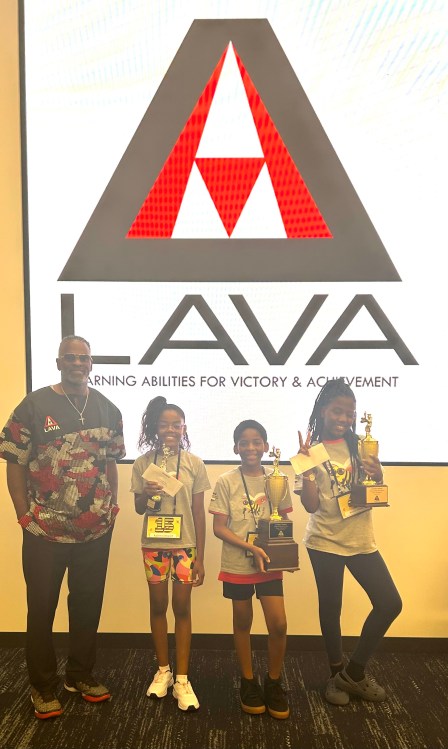
Coach Bentley with third place winner Kallena Stewart, her brother and first place winner, Ian Stewart, and second place winner, Amina Gulley.

The semifinal and final spelling bees offer sizable cash prizes. Thus far, the money for the prizes has been earned by youth volunteers working with LAVA coaches to clean the facilities at Edge Academy. Moving forward, as the program expands into additional schools, Bentley wants to recruit more “coaches” from the community to also help students practice for the spelling bees.

It is possible that the sole reason some of the students initially compete in the spelling bees is to try and win the cash prizes. And that’s okay. When judging, I sit in front of the students and look at their faces as their spelling word is announced. I know immediately which students have studied the word list because their eyes grow large and sparkle when they know that they’ve got it memorized.

Academic accomplishment that comes after studying hard produces a feeling that is often addictive. I liken it to sports like swimming or distance running. Yes, students compete with their school teams, but each athlete is specifically working on improving their individual PR, or personal record. 

At this year’s inaugural LAVA championship spelling bee, multiple students I have tutored demonstrated the intelligence and agency I always knew they had, they just needed the extra support and encouragement that LAVA provides. Tapping into that potential can change the trajectory of students’ lives. It also builds and benefits the entire community.

This was published in the Akron Beacon Journal on Sunday, September 8, 2024.